News Category 2
Holiday Illness Fraud: pursuing committal proceedings against dishonest claimants - even if legal proceedings are not submitted by the claimant - Jared Mallinson, Horwich Farrelly
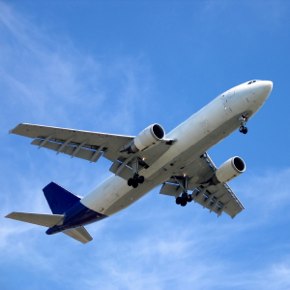
23/12/19. Jared Mallinson, Fraud Partner at Horwich Farrelly, looks at why the fight against fraudulent holiday illness claims is still as crucial as ever.
In recent years the travel industry saw a huge rise in the number of fraudulent holiday illness claims and learnt of the impact this was having on both the insurance and travel sectors. ABTA reported that the number of holiday sickness claims had increased by 500% since 2013, with the same report also disclosing that 1 in 5 adults had been approached whilst on holiday to make a compensation claim for holiday sickness.[i] And bogus holiday sickness claims were reported to be costing the travel sector £50 million per year[ii].
Tackling this endemic threat, Horwich Farrelly has been working with the travel industry to apply its proven zero tolerance approach to fraud with the result that, to date, it has successfully defended almost 3,500 holiday illness claims. And whilst the topic of holiday illness fraud is not being as widely reported, it still remains a big threat.
The recent case of Jet2holidays Limited vs Hughes and Hughes demonstrates exactly why the travel and insurance markets must not take their eye off the ball when it comes to defending fraudulent holiday sickness claims.
Horwich Farrelly worked alongside Jet2holidays Limited to secure a landmark Court of Appeal ruling which will make it easier for travel companies and their insurers to take action against holidaymakers who make fraudulent claims for compensation, even if they do not actually submit legal proceedings.
Background to the case
The case saw an initial claim from Mr and Mrs Hughes who, following an all-inclusive holiday to Lanzarote in December 2016, put forward a claim for damages for holiday sickness under the Package Travel, Package Holidays and Package Tour Regulations 1992 and under the Consumer Rights Act 2015. The pair alleged that while on holiday they contracted food poisoning as a result of eating contaminated food/drink and swimming in the hotel’s allegedly insanitary swimming pool.
The key point about this claim is that both Mr and Mrs Hughes submitted a claim for the alleged illness via legal advisers, and this included signed witness statements with their version of events. In the official judgment it was noted that:
-
Under cover of a letter from the respondents’ legal advisers dated 2 May 2017 and another dated 27 July 2017 the appellant received respectively a witness statement of the second respondent and a witness statement of the first respondent (“the original witness statements”) in purported compliance with the Personal Injury Claims PAP. Each of the original witness statements was dated 12 April 2017 and was in the usual form used in civil proceedings, save that the heading did not contain the name of a court. In the heading and in the body of each of the witness statements the relevant respondent was described as the “Claimant”. The appellant was described in the heading as the “Defendant”. Each witness statement contained a signed statement of truth...
Image ©iStockphoto.com/cb34inc
FREE CHAPTER from ‘A Practical Guide to the Law of Driverless Cars – Second Edition’ by Alex Glassbrook, Emma Northey & Scarlett Milligan

20/12/19. With the increase in numbers of electric vehicles, automated driving systems are becoming widespread. The next phase of the evolution in road vehicles – towards fully-automated cars – is nearly upon us.
Since the publication of the first edition of this book, a cornerstone piece of legislation (the Automated and Electric Vehicles Act 2018) has appeared on the British statute book, though it is yet to be brought into force. Accordingly, this second edition moves away from theoretical discussion toward analysis of that legislation, and of other legal problems which will be engaged by the introduction of all forms of automated driving systems.
This edition offers practical commentary on questions such as: When the technology arrives, how will the courts react? What arguments might emerge? What does the legislation currently cover? What shape might future laws take in a world of artificially intelligent vehicles?
Covering key topics including road traffic accidents, product liability claims, privacy, and the ways in which society might regulate these vehicles, “A Practical Guide to the Law of Driverless Cars – Second Edition” is an indispensable guide to the British laws of automated vehicles, and to the legal problems and solutions of our near-future.
CHAPTER ONE: LIFE BEFORE THE AUTOMATED AND ELECTRIC VEHICLES ACT 2018
OBJECTIVES OF THIS CHAPTER
The objectives of this chapter are to:
-
Outline key aspects of the CAV technology which is likely to appear on our roads in the next few years;
-
Briefly explore the role of negligence in road traffic accidents today;
-
Explain the new and interesting problems which CAV technology will pose to the current negligence framework;
-
Highlight likely points of dispute between parties in negligence cases involving CAVs, and discuss how our laws may need to evolve to fully accommodate and resolve such disputes;
-
Explain how the Automated and Electric Vehicles Act 2018 (“the AEVA”) may (or may not) resolve the problems highlighted.
THE EARLY EMERGENCE OF CAV TECHNOLOGY
ON OUR ROADS (SAE LEVELS 1-3)
Any book or discussion exploring artificial intelligence (“AI”) and Connected and Autonomous Vehicle (“CAV”) technology is likely to strike a reader as not only complex, but somewhat futuristic: after all, fully autonomous cars, taxis and delivery vehicles are not expected to arrive on our roads in the immediate future. Moreover, even when those vehicles do arrive, it will take some years before they form the majority on our roads and can truly be described as embedded in our daily lives. Thus, many readers may be wondering: it is too early to contemplate the impact of CAVs on road traffic accident law? Surely the future arrival of CAV technology will be accompanied by a specific legal framework?
The reality is that elements of CAV technology will be with us sooner than one might expect; indeed, readers will already be familiar with some aspects of automated technology, for example: cruise control; lane-keeping tools; automatic parking, or parking assist systems. These technologies fall within SAE Levels 1 and 2, and are already beginning to give rise to legal and technical questions and problems, such as:
-
Will a lane-keeping tool be programmed to move a car to accommodate or avoid a cyclist? Or will the car need to be programmed to maintain its position to prevent it colliding with other traffic? Would the cyclist or the vehicle be responsible for a collision in such circumstances? How should the vehicle have been programmed?
-
If I ask my car to park itself in a narrow space, am I to blame if another vehicle is damaged, or is it the fault of the vehicle for failing to park correctly, or to otherwise say ‘no’?
Whilst some manufacturers are focussing on moving straight from existing technologies to Level 5 (i.e. “fully autonomous”) vehicles, others appear to be phasing in new technology incrementally, slowly working up the SAE scales.
There is therefore a chance that we may become familiar with, and users of, Level 3 vehicles in the near future. A user of a Level 3 CAV (whom we might traditionally think of as the ‘driver’) is required to monitor the CAV at all times, and be ready to override or intervene in its driving, once more assuming the ‘traditional’ driver role. The Law Commission have suggested that an individual monitoring a CAV be referred to as a “User in Charge”1, and that phrase has been adopted throughout this book.
As we will explore, the combined responsibilities of a User in Charge and a CAV pose practical and legal problems, particularly where Level 3 vehicles are concerned. The concerns surrounding Level 3 CAVs have even caused some to call for their prohibition on public roads, or for their use to be restricted to certain environments2.
Level 3 CAVs are highly unlikely to be governed by the Automated and Electric Vehicles Act 2018 (“AEVA”): Section 1 of the AEVA refers to vehicles which are “…designed or adapted to be capable, in at least some circumstances or situations, of safely driving themselves”. By their very definition, Level 3 CAVs can never guarantee that they can safely drive themselves: they require constant monitoring by a User in Charge, and can request that the user takes over the driving at any given time. This would appear to bring them outside of the AEVA’s definition and coverage. As a result, it seems inevitable that our current legal framework would need to be adapted to accommodate road traffic collisions involving Level 3 CAVs. This is not without its challenges, which we will explore in this chapter. We will also explore the issues which are likely to be at the heart of any future disputes, and the ways in which our legal system may need to develop to resolve these problems.
At the time of writing (in September 2019), there are two significant unknowns which will have a substantial bearing on the role and responsibilities of a User in Charge, as well as the outcome of any negligence claims concerning CAV collisions.
The first unknown is whether and when a User in Charge will be required to intervene in a CAV’s driving. Will he or she only need to do so in response to a request from the CAV itself (for example, where it has encountered a road without connectivity, or which is otherwise beyond its capabilities)? Or will Users in Charge be expected to voluntarily intervene in, or override, the CAV’s driving (for example, where they believe that a CAV is driving inappropriately or dangerously)? This is explored in more detail later in this chapter, under the heading ‘The Duty of Care and Standard of Care’.
The second (and related) unknown is the extent to which Users in Charge can reasonably be expected to monitor a Level 3 CAV. It will be challenging to maintain focus and avoid distraction whilst a Level 3 CAV has responsibility for the task of driving: one can imagine how easy it might be to let one’s thoughts drift off, or to be tempted to quickly answer a call or text message.
The courts are unlikely to condone such wilful neglect of one’s duty to monitor a Level 3 CAV. Might they be more forgiving of a User in Charge who is still watching the road, but has lost their focus? This seems unlikely: if Level 3 CAVs are to function safely on public roads, it seems that the courts would have no choice but to hold users to high standards. Accepting that Users in Charge will reasonably lose their focus and attention would, in effect, be an acceptance that Level 3 CAVs are not safe for general use. In this regard, manufacturers will also need to play their part by assisting Users in Charge; for example, they may need to install regular in-car alerts or other attention-grabbing devices.
In light of the unknowns surrounding Level 3 CAVs, the remainder of this chapter has necessarily proceeded on the basis of three assumptions:
-
Level 3 CAVs will be manufactured and permitted to be driven on public roads;
-
Users in Charge of Level 3 CAVs will be expected to maintain their focus and concentration on the CAV’s driving at all times, as if he or she were the driver themselves;
-
Users in Charge of Level 3 CAVs will be expected to intervene in a CAV’s decisions and driving, both on request and voluntarily.
BRINGING PROCEEDINGS AGAINST A DRIVER
IN A NON-AEVA CASE
Today, those who have the misfortune to be involved in a road traffic accident are likely to be aware of their right to bring proceedings against the ‘at fault’ driver (or of the rights of others to bring proceedings against them, in the event that they were the driver at fault). They may or may not know that this involves suing the driver for negligence, or that their insurance company may be doing this on their behalf.
What is likely to be well known to all readers of this book, but is briefly set out here for completeness, is that a party bringing negligence proceedings would need to prove:
-
That the driver owed them a duty of care (although this is rarely a contentious point, as the common law has long accepted that drivers owe a duty of care to other road users);
-
That this duty of care was breached; i.e. the driver’s actions fell below those expected of a reasonable driver;
-
That this breach of duty caused injury, loss or damage.
The application of the principles of negligence to road traffic accidents is a well-trodden path. As a result, the majority of cases can be resolved on the facts of the case alone, and without explicit reference to (or debate on) the legal principles of negligence. To date, these familiar approaches have, of course, been based on conventional (Level 0) vehicles. As we will now discuss, applying them to CAV technology is not without its problems.
The Duty of Care and Standard of Care
Users in Charge of CAVs will still owe other road users a duty of care: the introduction of advanced technology is unlikely to justify a departure from the status quo (and, if anything, its new and inherently dangerous nature is more likely to justify an enhanced duty of care).
The waters begin to get muddied when we turn to the standard of care that will be expected of Users in Charge, i.e. a court’s assessment of whether their conduct has fallen short of that expected of a reasonable User in Charge.
CAV technology will – for quite some time – be in a state of continuous development, and this is likely to induce an element of user unfamiliarity or hesitancy. In that context, how will judges determine what is ‘reasonable’? Issues to be determined by the courts include:
-
At what point would a court declare that a reasonable user should have intervened in the driving of a Level 3 CAV?
-
Would the absence of a warning or request from the CAV be sufficient to exonerate their blame?
-
Would failing to read a CAV instruction manual from cover to cover be deemed unreasonable?
-
In what circumstances and environments would it be unreasonable to deploy an automatic parking feature?
Overriding a Level 3 CAV: what is reasonable?
The expectations surrounding voluntary intervention are particularly tricky to assess, and can all too easily be judged with the benefit of hindsight. Imagine if you were a User in Charge monitoring your new Level 3 CAV. You are travelling at 50 miles per hour in the middle lane of a dual carriageway. The CAV has control of all driving functions, and the in-built monitoring system shows that it will soon transition to the left-hand lane, ready to exit the dual carriageway at the next slip road.
You notice a small red car in the left-hand lane, marginally ahead of your CAV. Your CAV turns on its indicators, and begins to drift toward the left-hand lane. Your gut reaction tells you that this is a little too early, and that the CAV should have left more space between you and the red car. You reassure yourself that your CAV – with its sensors, lasers, cameras and high-tech GPS – will have calculated the speed of both vehicles, as well as the distance between them, and would not have proceeded if it were unsafe to do so. You also recall being told by the seller that these vehicles can communicate with each other using Vehicle to Vehicle (‘V2V’) technology: perhaps the car in front is also a CAV and the two vehicles have synchronised their movements?
Unfortunately your CAV moves to the left-hand lane but does not reduce its speed, and the gap between the vehicles begins to close. You reach for the mechanism which will enable you to take control of the vehicle, but it is too late. You collide with the red car, causing damage to both vehicles, and causing your passengers to sustain minor injuries. Should you be criticised for failing to intervene at the point where your gut told you something was wrong?
In a parallel world, at the very point that your CAV began to drift towards the left-hand lane, you decided to override the system and take back control. A few seconds later you cancelled the left indicator and returned to the middle lane. However, the blue car behind you saw you leaving the lane, and decided to accelerate to make progress. It could not reduce its speed in time, and crashed into the rear of your CAV. Was your last-minute change of direction unreasonable? Should you have simply trusted the CAV to do its job?
In addition to voluntary interventions, a CAV-initiated handover could cause difficulties, for example, where a CAV gave very little warning of an imminent handover, or if the User in Charge had lost their focus, and was not sufficiently prepared to take action to avoid a collision.
In these scenarios, a court’s assessment of the user’s actions (whether they fell below the standard of a reasonable User in Charge), will be highly fact specific. Key factors will include:
-
the presence or absence of a warning or request from the CAV;
-
the amount of time or notice given by the CAV;
-
reaction times;
-
the ease or difficulty of activating the ‘override’ function in a particular CAV;
-
the User in Charge’s level of concentration on the road;
-
the User in Charge’s perception of the risk, and when he or she first became aware of the risk;
-
any factors against human intervention, for example dense fog, which might make the sensors of a CAV more reliable than the human eye.
As with the case law surrounding conventional vehicles, it will take some time for the courts to establish the norms we expect of Users in Charge in these complicated scenarios. This will necessarily result in a period of uncertainty for drivers, those seeking compensation, and insurance companies.
Should Users in Charge be expected (and permitted) to override
Level 3 CAVs?
In light of the uncertainties explored above, should voluntary interventions be prohibited? Whilst it seems unlikely that CAVs will be developed in a way that physically restricts such an intervention, it would be possible for non-authorised interventions to be actionable in negligence proceedings.
If a major benefit of CAV technology is the elimination of human error from driving3, it is illogical to place an obligation on humans to second guess the decisions of their CAV. The chances are that humans will alter a CAV’s decisions out of mistrust or an abundance of caution, and will do so with significantly less information than the CAV (bearing in mind its sensors and its ability to connect to the surrounding environment). Not only will this undermine the benefits of CAVs, it could in fact create a dangerous situation (as with our blue car example above).
Furthermore, the quality of human intervention is likely to be questionable: as humans begin to regularly use and rely upon CAVs, their driving experience, reactions, and perceptive abilities will decline. This will be particularly true of new drivers, who will not have had the opportunity to cement their repertoire of new skills. Thus, when drivers are called upon to intervene or take control of the driving, typically in ‘difficult’ or emergency scenarios, their skills will be less fine-tuned, yet more important than ever.
Despite this, the argument that humans should be prohibited from playing an active role in minimising the risks of CAVs will strike many as unpalatable. This is particularly so when one acknowledges that initial CAV technology will be far from perfect, and that errors and accidents will almost certainly occur.
The AI behind CAVs will necessarily be far more complex than the algorithms used in other forms of automated transport (which may be as simple as ‘green light = go’; ‘red light = come to a stop and remain stationary’). CAVs must instead interpret multiple sources of data, and make a considered decision as to the best way to proceed. Sticking with the rudimentary example of traffic lights, a CAV must, as a minimum, do all of the following: use its camera to assess the traffic lights; ascertain its location on a GPS; and scope the area for any vehicles, pedestrians or objects which may cause a collision (using a combination of its camera and other sensors, such as lidar, radar and/or ultrasound). The CAV must then proceed in a manner and speed that is appropriate for the surroundings, including the weather. Such a complex composition of facts, all liable to change within seconds, cannot be pre-programmed. The CAV must use its own artificial intelligence to make split-second decisions, and to continually learn from them.
Whilst the testing and programming of CAVs will undoubtedly be rigorous, the inability to pre-programme all situations, or to control the AI’s learning, makes it inevitable that the debut of CAVs will necessitate a period of reflection and learning. CAVs may initially make poor decisions, or fail to recognise objects or dangers, which will, in turn, endanger its occupants.
This ‘trial period’ will be most prominent in Level 3 vehicles, assuming that they will be permitted on our roads. This, in itself, may be a compelling reason to require Users in Charge to intervene in a CAV’s driving where they deem it necessary. Alternatively, the dangers associated with a ‘trial period’, combined with the uncertainty and poor quality of human interventions, may be a compelling argument for a prohibition on Level 3 CAVs altogether.
The Law Commission’s Preliminary Consultation Paper4 proposed that where the
“…automated driving system [is] appropriately engaged, the user-in-charge would not be in control of the vehicle. They would not be responsible for any problems arising from how the vehicle is driven.”
It would appear to follow from this that there would be no requirement on a User in Charge to voluntarily intervene in a CAV’s driving. The simplicity of this approach is attractive, as it enables us to bypass many of the problems set out above, and to allocate accidents as either ‘user-caused’ (and dealt with through typical negligence proceedings) or ‘vehicle-caused’ (dealt with through the channels of product liability, which are discussed further in Chapter 9).
However, whilst this approach would work well for Level 4 and Level 5 CAVs (where there is a clear dividing line between the responsibilities of the CAV and the User in Charge) it seems inappropriate in the context of Level 3 CAVs: if a User in Charge is required to monitor the CAV at all times, surely their monitoring (or lack thereof) ought to be subject to legal scrutiny? A lack of responsibility and accountability could lead to a sense of complacency, creating (or enhancing) the risk of Users in Charge failing to give a CAV’s driving their undivided attention.
Causation and Contributory Negligence before the AEVA 2018
Causation
The difficulties do not end there for claimants bringing negligence proceedings: they will also need to establish both factual and legal causation. This book is not the appropriate forum to explore the breadth and depth of case law on tortious causation; our endeavour is to provide examples where CAVs may throw up complications.
Returning to our earlier example of your new CAV and the red car: if you had decided to intervene in the CAV’s decision, would it have made a difference? Allowing for your personal reaction time, the time taken to switch your CAV to its ‘manual’ mode, and the time it took you to return your CAV to the middle lane, it may nonetheless have been too late. The accident may still have occurred, though it may have caused less damage.
These questions, aimed at establishing factual causation, will be highly fact-specific. Their resolution is also likely to require a myriad of complex evidence, including:
-
information on reaction times;
-
an explanation of the speed and ease with which a particular model of CAV can switch from ‘automated’ mode to ‘manual’ mode;
-
information from the system as to whether or not a warning or request for intervention was issued; and
-
the various forms of ‘live’ information and data captured by the CAV.
The resolution of road traffic accidents is likely to become significantly more technical and expensive as a result.
Contributory Negligence
Allegations of contributory negligence are likely to present additional complexities. Let us take a new example: you are the User in Charge of your new Level 3 CAV which is driving itself along a country lane. On a stretch of road you see a cyclist. There is sufficient room to overtake the cyclist, and the other side of the road is clear. As your CAV begins to overtake of its own volition, the cyclist veers out into your path. You have been monitoring the CAV’s driving, and your instincts cause you to grab the steering wheel and direct the CAV away from the cyclist. However, a vehicle approaching from the opposite direction is driving too fast. It emerges round a bend and crashes into the front of your CAV.
Who is to blame here: the cyclist for veering out? Your CAV for failing to pre-empt this situation, and/or failing to respond in the heat of the moment? You, for taking your car onto the wrong side of the road, and possibly undermining the CAV’s response? The speeding driver approaching from the opposite direction? Or a mixture of all of the above and, if so, in what proportion? A judge seeking to resolve this situation will be faced with conundrums of principle, factual untangling and analysis, and – in all likelihood – an abundance of technical data.
This multi-party confusion also brings uncertainty as to who should be sued, and for what. The above example involved four potential parties: you; the cyclist; the manufacturer of your CAV; and the oncoming driver. The roles of insurers, and the garages who installed/checked/amended your CAV’s software, may also need to be considered5. It would therefore seem that claimants falling outside the scope of the AEVA regime could have a difficult, expensive, and protracted route to receiving compensation.
Another facet of CAV technology which may further complicate these matters is the possibility of human intervention taking place outside the CAV, for example, an employee remotely monitoring a delivery vehicle, ready to assume the controls of the CAV if required to do so.
The Government’s latest code of practice on automated vehicle trialling (produced by the Centre for Connected and Autonomous Vehicles)6 confirms that trials of Level 3 CAVs may be conducted remotely, provided that minimum safety requirements are met. Although it is not yet clear whether remotely monitored CAVs will be permitted for mainstream use on public roads, this could introduce yet another level of complexity to the causation analysis. Questions posed by this technology include:
-
How quickly would one be expected to act when removed from the situation?
-
How would the distance impact one’s reaction times?
-
Would commands take longer to register with the CAV given the physical distance between the CAV and the monitoring individual?
-
What happens when signal or connectivity fails, and who would be responsible for any injury or damage as a result of such failures?
Whilst the Law Commission’s analysis of responses to its preliminary consultation paper suggests there would be a separate regime for remotely operated CAVs7, it is nonetheless likely that the courts would still need to confront these questions in the context of negligence proceedings.
The questions posed in this section are not exhaustive. We foresee a potential minefield of litigation surrounding the standards of conduct and the rules of causation on our roads, as our older legal principles adapt to new technology and societal behaviours.
Negligence Actions Post-AEVA?
Although this chapter has primarily been aimed at Level 3 CAVs (and any Level 4 or Level 5 CAVs not covered by the AEVA8), it should be noted that the problems we have discussed could – in the absence of additional changes to the law – apply to any CAV. This is for three main reasons.
Firstly, the AEVA does not exclude or prevent claimants from suing other parties in negligence, rather than relying on the AEVA. Whilst this is inherently unlikely in light of the advantages offered by the AEVA (explained in detail in Part Two of this book), it is theoretically possible.
Secondly, whilst the AEVA gives claimants the opportunity to bypass the thorny problems raised in this chapter, such problems may nonetheless be of ongoing concern to insurers. Where insurers seek to recover their outlay from others (for example, the User in Charge, or another driver), they will still be faced with the complex factual and legal problems examined in this chapter.
Thirdly, some CAV-related claims may fall outside of the AEVA regime, for reasons explored in Chapter 5 (“Exclusions and restrictions in the AEVA 2018”). Absent any further legislation on this topic, such claims are most likely to be dealt with as negligence actions, requiring claimants to face the issues highlighted in this chapter.
Thus the factual and practical problems associated with CAV-related negligence claims will not disappear overnight, even with the assistance of the AEVA.
Actions against manufacturers and software installers
The bulk of the examples in this chapter have assumed that, at least to some extent, the ‘User in Charge’ of a Level 3 CAV was at fault. But what if the CAV technology had a part to play, or was in fact the entire cause of the mishap? Such situations might call for a product liability claim to be made against a manufacturer, seller, or other supplier. We discuss these claims in Chapter 9.
HOW FUTURE LAWS MIGHT DEAL WITH OUR CASE
Could – and should – Parliament legislate to explicitly identify the standards to which Users in Charge of Level 3 CAVs will be held? It could certainly do so, but like any area of codification the legislation could never provide for every factual scenario. This seems especially so in a world of rapid developments and self-learning AI, where legislation is likely to become outdated swiftly, and would require constant monitoring and revision.
Even if one sets these difficulties aside, legislation could never provide for the practical uncertainties faced by those bringing negligence claims; for example, the complex factual analysis, the sheer volumes of information, and the number of parties that may need to be involved in a legal claim.
On any view, it is incontrovertible that the courts will be required to adjudicate on this subject matter, and that our legal system will face fresh challenges of a kind which may call into question the very way we litigate.
SUMMARY OF POINTS ON DRIVING CAVS BEFORE
THE AEVA
|
Level 3 CAVs are yet to be manufactured for widespread use on our public roads, but there is a distinct possibility that they may appear within the next few years. |
|
Accidents in Level 1-3 CAVs will be governed by the principles of negligence |
|
It is unclear whether Users in Charge will be expected (or permitted) to voluntarily intervene in a CAV’s driving |
|
CAV handovers and interventions may lead to accidents. It will be for the courts to assess whether the actions of a User in Charge were ‘reasonable’ |
|
Where a CAV has control of the driving functions, a User in Charge could nonetheless be found negligent for failing to monitor the driving |
|
Questions of causation and contributory negligence will require detailed factual analysis, which is likely to necessitate the provision of complex evidence |
|
The AEVA cannot resolve all of the problems associated with CAV-related negligence claims, and the courts will be required to be determine these difficult issues |
MORE INFORMATION / PURCHASE THE BOOK ONLINE
1The Law Commission’s Consultation Paper No. 240 “Automated Vehicles: A Joint Preliminary Discussion Paper”, dated 8 November 2018, particularly at paragraph 1.42: https://s3-eu-west-2.amazonaws.com/lawcom-prod-storage-11jsxou24uy7q/
uploads/2018/11/6.5066_LC_AV-Consultation-Paper-5-November_061118_WEB-1.pdf
2See, for example, the Law Commission’s “Analysis of Responses to Law Commission Consultation Paper No 240”, dated 19 June 2019, at paragraphs 3.131 – 3.136: https://s3-eu-west-2.amazonaws.com/lawcom-prod-storage-11jsxou24uy7q/
uploads/2019/06/Automated-Vehicles-Analysis-of-Responses.pdf
3To fully understand the significance of this, see the House of Lords Science and Technology Select Committee’s Paper No. 115 ‘Connected and Autonomous Vehicles: The future?’, dated 15 March 2017. The evidence given to the committee was that human error was a causal factor in 90-95% of road traffic accidents (see paragraph 81): https://publications.parliament.uk/pa/ld201617/ldselect/ldsctech/
115/115.pdf
4Footnote 1, at paragraph 3.47
5Product liability actions against these parties are explored in more detail in Chapter 9
6The Centre for Connected and Autonomous Vehicles’ ‘Code of Practice: Automated vehicle trialling’ dated February 2019: https://assets.publishing.service.
gov.uk/government/uploads/system/uploads/attachment_data/file/776511/code-of-practice-automated-vehicle-trialling.pdf
7The Law Commission’s “Analysis of Responses to Law Commission Consultation Paper No 240” (footnote 2), particularly at paragraphs 1.7 and 3.11
8On which see Chapters 2 and 5
Image ©iStockphoto.com/metamorworks
PI Practitioner, December 2019

16/12/19. Each issue a particular topic is highlighted, citing some of the useful cases and other materials in that area. You can also receive these for free by registering for our PI Brief Update newsletter. Just select "Free Newsletter" from the menu at the top of this page and fill in your email address.
This month's practitioner update concerns the appropriate basis for quantifying a claimant's future loss of earnings.
Khuzan Irani v Oscar Duchon [2019] EWCA Civ 1846
The Claimant had suffered serious injuries in a road traffic accident in July 2013. Whilst he had made a good functional recovery, he suffered ongoing pain. The Claimant brought a claim for damages. Liability had been admitted by the Defendant, however, quantum was disputed.
The Claimant, who was born in India, came to the UK in 2010 and completed a Master of Science degree. At the time of the accident he was working at BNL (UK) Ltd, a manufacturer of polymer bearings. The Claimant's immigration status in the UK depended on continuity of employment. However, following the accident, he was made redundant and...
Image ©iStockphoto.com/EmiliaU
When the Ogden Tables just don't work - Malcolm Henke, Horwich Farrelly

10/12/19. Particularly during periods when low discount rates produce high multipliers, claimants will always seek to have their claims for future losses calculated on a multiplicand/multiplier basis, using the Ogden Tables. Indeed, in Irani v Duchon (2019) EWCA Civ 1846 the Court of Appeal confirmed that was the method to be preferred when calculating future loss of earnings. However, the court also recognised that there will be cases, such as this, where a broad-brush approach leading to a lump-sum or Blamire award would be unavoidable.
By way of example, the Court of Appeal suggested there would be no real alternative to a Blamire award if there was insufficient evidence or there were too many imponderables for the judge to be able to make the findings necessary to support the multiplicand/multiplier approach. In order to calculate the multiplicand, it was necessary for the claimant to establish on the balance of probabilities (i) the but for (the accident) earnings and (ii) the residual earnings. This would include consideration of...
Image ©iStockphoto.com/peepo
Credit Hire: Is it right to hire when the cost of a replacement taxi exceeds a claimant's profits? - Darren Mendel, Partner at Horwich Farrelly

04/12/19. Darren Mendel, Partner at Horwich Farrelly, looks at the case of Hussain v EUI Limited where the issue of hire and profit was thrown into question
The recent case of Hussain v EUI Limited saw a familiar scenario for insurers where the defendant was presented with an 18 day hire period for a replacement Mercedes E220 from a specialist provider of plated vehicles. The claimant taxi driver sought to recover hire charges in the sum of £6,596.50. However, if he had not gone into hire and simply claimed a loss of net profit the claim would have been for a mere £423.
At the original trial HH Judge Carmel Wall limited the claimant’s claim to loss of profit as it was decided that “where the loss is of a profit-earning chattel, then the measure of damages is kept at the loss of profits and it is unreasonable mitigation to expend more in attempting to make a profit than the profit itself’’. Therefore, the claimant was awarded £423.
The claimant sought to appeal the decision to the High Court on the grounds that the judge was wrong to find that, as the claimant’s vehicle was a profit earning chattel, that claimant’s claim for the loss of use of that vehicle as a results of the defendant’s negligence was referable the claimant’s lost profits rather that the cost of hiring an alternative vehicle. Furthermore, the judge was wrong to find that the defendant had discharged the burden of proof in relation to the availability of a hire vehicle at a basic hire rate when the evidence relied upon by the defendant:
-
failed to show that the hire company whose rates were quoted were able to supply the claimant with a vehicle plated for use in applicable area;
-
failed to show that such hire company actually had any vehicles available for the claimant’s use at the time of hire;
-
failed to show that they were willing to hire a vehicle to the claimant for the 18 day period he was without the use of his own vehicle following the accident.
Nevertheless, Mr Justice Pepperall rejected the claimant’s appeal for the below reasons...
Image ©iStockphoto.com/blueclue





![Appeal judge rules that credit hire company has no costs liability following a finding of fundamental dishonesty in personal injury case: RSA v. Fastrack Solutions Limited [2023] 4 WLUK 92 - David Bowden, Erimus Chambers](/content/images/resized/images/stories/carkeys_72_72.jpg)


