News Category 3
Driving a coach and horses: District Judge reins in unqualified advocates - Michael Brooks Reid, Temple Garden Chambers
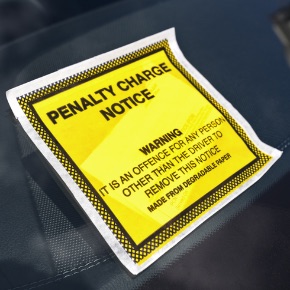
21/01/26.Michael Brooks Reid discusses the decision of District Judge Pratt (“the Judge”) in Vehicle Control Services Ltd v Langley [2026] EWCC 1, which will be undoubtedly ruffling feathers at HQ of the well-known advocacy agencies.
The case was a routine small claims trial over an unpaid parking charge. The only individual in Court who appeared for the Claimant was Mr Boaten, a “Solicitor’s Agent” (which, as the Judge noted, is a misleading non-legislative term). In a familiar arrangement, the Claimant had instructed solicitors who were on record, who in turn contracted Elms Legal Advocates Ltd (“Elms”), who are not solicitors of record, and who in turn subcontracted Mr Boaten on a one-off basis.
A challenge was made to Mr Boaten’s right of audience.
The Law
The Court examined three possible routes through which a non-qualified person may lawfully exercise a right of audience, ultimately finding that Mr Boaten qualified for none.
The most significant analysis (and the focus of this article) was in respect of the statutory provisions of the Legal Services Act 2007 (“the 2007 Act”) which create and define an “Exempt Person”, an unqualified individual who has a right of audience.
The statutory test is set out at Schedule 3, Paragraph 1(7) of the 2007 Act. It requires the following four conditions to be met:
(1) the individual must be assisting in the conduct of litigation (“Condition 1”);
(2) the individual must be supervised by an authorised litigator in the proceedings (“Condition 2”);
(3) the relevant hearing must be taking place “in chambers” (“Condition 3”);; and
(4) the relevant hearing must not be reserved family proceedings (“Condition 4”).
The Decision
Whilst the Judge found that Conditions 3 and 4 were satisfied, the Claimant’s case failed on...
Image ©iStockphoto.com/BrianAJackson
Commitment Issues: The Court of Appeal Separates Committal from Contempt - Georgina Pressdee, Temple Garden Chambers

21/12/25. On 11 November 2025, the Court of Appeal handed down its Judgment in Buzzard-Quashie v Chief Constable of Northamptonshire Police [2025] EWCA Civ 1397 which reiterates and reaffirms several key principles in the law of civil contempt.
Background
The Appellant (A) had been arrested and taken into custody but the charges against her were quickly dropped. She alleged that she was assaulted by the arresting officers and complained about this via telephone shortly after the arrest. She requested all the footage recorded on the officer’s body worn cameras (BWV) and asked for it to be preserved. When the police refused, A obtained an order from the ICO that it be produced. Following this she brought proceedings for breach of statutory duty under the Data Protection Act 2018 and obtained a Judgment for its production, together with an explanation for any footage that was no longer available. When neither part was complied with, A applied to commit Chief Constable of Northamptonshire Police (R) for contempt.
A's application failed on the facts because a witness statement was lodged on R’s behalf expressly stating that all BWV in existence had been produced. HHJ Genn held that it must also fail as a matter of law, because (1) there was no intention to interfere with the administration of justice, (2) R was not personally responsible for acts performed by members of his police force, and (3) there was no penal notice on the order.
A was granted permission to appeal. The footage, whose existence had been denied, was finally discovered a few days before the hearing. R conceded the appeal, but the Court of Appeal nevertheless considered the matter, as it raised important legal points of wider application. A’s grounds of appeal included a challenge to all three of HHJ Genn’s conclusions on law (referred to below as Grounds 1 to 3).
Ruling
Ground 1
The Court of Appeal considered the authorities (notably Caudrilla Bowman Ltd v Persons Unknown [2020] EWCA Civ 9 and ADM International SARL v Grain House International SA [2024] EWCA Civ 33) and affirmed that specific intention to commit a contempt is relevant to the sanction but not required to make a finding of contempt. The relevant intention is simply to do the act or omission that constituted a breach of the order, objectively construed.
Ground 2
The Court of Appeal considered R’s legal personality under The Police Reform and Social Responsibility Act 2011, as a corporation sole (Schedule 2, para 2) and that the police force and its civilian staff are under R’s direction and control (Section 2(3)). This led to the conclusion that there is no distinction between R himself and those under his direction and control. The Court reiterated the comments of Lord Woolf in M v Home Office [1994] UKHL 5; [1994] 1 AC 377 that, “the object of the exercise is not so much to punish an individual as to vindicate the rule of law by a finding of contempt. This can be achieved equally by a declaratory finding of the court as to the contempt”.
Ground 3
The Court of Appeal considered that creating two different tiers of Court order – those with a penal notice and those without – could make compliance with the latter “nice but not essential”. The requirement in CPR r81.9(1) that there be a penal notice relates only to enforcement (by committal), not to findings of contempt at all (CPR r81.4). The existence of a penal notice is relevant only to the appropriate sanction.
Comment
This Judgment largely rehearses and restates existing principles in the law of civil contempt. The key take home for practitioners is the need to separate the two stages of a finding of contempt: (1) the finding itself and (2) the appropriate sanction. The wilfulness of the breach, personal involvement of the respondent and existence of a penal notice all speak to the second stage but not to the first.
Image ©iStockphoto.com/jeffdalt
Causation proves fatal in tragic suicide case - Michael Brooks Reid, Temple Garden Chambers

18/12/25. Michael Brooks Reid discusses the recent Court of Appeal decision in the clinical negligence case Zgonec-Rozej and Ors v Dr Stephen Pereira[2025]EWCA Civ 171. The judgment addresses interesting issues of causation and evidence of relevance to all personal injury practitioners.
Facts
John Jones QC (“Mr Jones”) was a patient of the defendant psychiatrist, Dr Stephen Pereira, at the Nightingale Hospital beginning in January 2016, suffering from severe anxiety and insomnia. Dr Pereira’s working diagnosis was bipolar affective disorder.
On 21 March 2016, Mr Jones’ parents contacted Dr Pereira urgently, reporting that Mr Jones was in crisis and a danger to himself. He was admitted to the Nightingale Hospital the following day. However, on around the same day, Dr Pereira went on three weeks’ leave without informing Mr Jones. Care was transferred to another consultant psychiatrist, Dr Bakshi, following an undocumented telephone handover.
Between 23 March and 10 April 2016, there was virtually no evidence before the court regarding Mr Jones’ care. This evidential gap resulted from a confidential settlement between the claimants and Dr Bakshi and the hospital, which rendered that period effectively off-limits.
Dr Pereira resumed care on 10 April 2016. Although he considered psychotherapy an important part of treatment, none took place. Following a deterioration reported by Mr Jones’ family, a meeting took place on 15 April to discuss whether Mr Jones should remain as an inpatient or be discharged. Early on Monday 18 April 2016, Mr Jones died at West Hampstead station after being struck by a train.
Members of Mr Jones’s family (“the claimants”) brought a claim in clinical negligence against Dr Pereira.
High Court decision
At first instance, Bourne J found that Mr Jones was suffering from a depressive reaction to stressful events rather than bipolar affective disorder but that the bipolar working diagnosis was not negligent. However, he identified three breaches of duty: failure to inform Mr Jones of Dr Pereira’s planned absence; inadequate handover to Dr Bakshi; and failure to arrange psychotherapy promptly on resuming care.
Despite these findings, the claim failed on causation. Bourne J held that none of the established breaches had been shown, on the balance of probabilities, to have caused or materially contributed to Mr Jones’ death. Had liability been established, he would have applied a 25% reduction for contributory negligence, finding that Mr Jones retained autonomy when he took his own life.
Court of Appeal decision
Causation
The claimants argued that the judge’s causation analysis was internally inconsistent. Psychotherapy was a central element of treatment for both bipolar affective disorder and depressive illness. Accordingly, a competent handover would necessarily have included a plan for psychotherapy. The failure to do so should therefore have been treated as causative, notwithstanding uncertainty as to what occurred during Dr Bakshi’s period of care.
The claimants also relied on the judge’s counterfactual observations that...
Image ©iStockphoto.com/D-Keine
Plead it or Weep: The Pitfalls of Oral Evidence in an OIC - Georgina Pressdee, Temple Garden Chambers

24/11/25. OIC hearings can, at times, feel like a lawless landscape when it comes to witness evidence. This article seeks to clarify when a witness can and should be allowed to give oral evidence at an OIC hearing, with reference to the procedure set out in PD27B. All paragraph references are to PD27B.
Who Should be Giving Oral Evidence?
If a party intends for a witness (including the Claimant) to give evidence at an OIC hearing, they should list the witness in their Claim Form or Acknowledgement of Service (“the pleadings”). For Claimants, this requirement is located at paragraphs 2.4(d), 2.5(c), 3.4, 3.5(2), 4.4(1)(f), 4.5, 5.4(1)(f)/5.5(e), 6.4(1)(f) and 6.5(e)). For Defendants, it is located at paragraphs 2.10(2), 3.11(2), 4.10(2), 5.10(2) and 6.10(2).
What if their Evidence is Not in the Court Pack?
If a witness’s evidence is not contained in the Court Pack, it should be summarised and described in the pleadings with an explanation as to why it was not produced as part of the steps taken under the RTA Small Claims Protocol (paragraphs 2.7(2), 2.11(1), 3.8(2), 3.13, 4.7, 4.11(1), 4.11(2), 5.7, 5.11(1), 5.11(2), 6.7(2) and 6.11(1)). The evidence must also be filed with the pleadings or an explanation given as to why this is not possible (paragraphs 2.7(1), 2.11(1), 3.8(1), 3.13, 4.7, 4.11(1), 5.7, 5.11(1), 6.7(1) and 6.11(1)).
PD27B suggests that the Court’s permission is required to rely on such evidence, by establishing a procedure for the parties to seek it (paragraphs 2.6(3), 3.7(3), 4.6(4), 5.6(3) and 6.6(3)). This is also implicit within Sections 2, 4, 5 and 6, which permit the parties to rely on evidence contained in the Court Pack “unless the Court makes a different order” (paragraphs 2.13, 5.14, 4.13 and 5.14). There is more flexibility in Section 3, which permits any evidence (including oral evidence) “which the Court considers is necessary to determine the Claim” as an exception to the general rule that the parties are limited to witnesses whose evidence is within the Court Pack (paragraphs 3.16 and 3.17(1)).
The directions order should tell you whether permission has been granted. For Sections 2, 4, 5 and 6, the standard directions in Appendix B are likely to apply “where the Court considers that the dispute between the parties and the evidence required at a hearing are adequately set out in the relevant Court Pack” (paragraphs 2.12(3), 4.12(3), 5.13(3) and 6.13(3)). This includes the granting of permission to rely on the contents of the Court Pack (paragraph 1) and to file and serve (by a given deadline) additional evidence attached to the pleadings or an additional witness statement from a witness named therein (paragraph 2). The directions order may depart from this, because the Court retains a discretion to give non-standard directions (paragraph 2.12(4), 4.12(4), 5.13(4) and 6.13(3)). For Section 3, the standard directions in CPR r27.4(3) apply, with additional directions where a party seeks to rely on evidence not contained in the Court Pack (3.17(2)).
Does the Evidence Need to be in the Form of a Witness Statement?
The Court Pack must contain the documents set out in the applicable table(s) from Appendix C (paragraphs 2.6(1), 3.7(1), 4.6(1), 4.6(2), 5.6(1) and 6.6(1)), which includes “any witness statements uploaded to the Portal”. Whilst the tables do not themselves mandate the inclusion of a witness statement, the express purpose of the Court Pack is, “to provide in one set of documents all the facts and evidence on which both parties intend to rely”. “Evidence” is not defined in PD27B, which leaves scope to argue that it does not need to be a signed witness statement. PD27B stipulates only that the pleadings must be signed by a statement of truth (paragraph 1.10) and CPR r32.4 is disapplied by CPR r27.2(c).
Conclusion
With the exception of Section 3, PD27B makes clear that a witness should only be giving oral evidence if they have been listed in the pleadings and –
- An account of their evidence has been provided as part of the steps taken under the RTA Small Claims Protocol (and should therefore be in the Court Pack); or
- The Court’s permission has been sought (and granted) to file and serve it subsequently in line with the procedure in PD27B.
Unless the directions require it, whether that account needs to be in the form of a witness statement is up for debate.
Image ©iStockphoto.com/Motortion
A Question of Fact: Factual findings and evaluation of evidence in the High Court - Michael Brooks Reid, Temple Garden Chambers

19/11/25. Michael Brooks Reid discusses the High Court’s approach to evaluation of evidence in the clinical negligence case Deakin-Stephenson v Behar & Chelsea and Westminster Hospital NHS Foundation Trust[2024] EWHC 2338 (KB).
Background
The Claimant, DS, was admitted to hospital in November 2016 with diverticulitis and a localised perforation. Following what she alleged to be negligent treatment, the Claimant required a permanent stoma. The central disputes at trial concerned what had been said and done at the time—particularly whether DS and her family had requested referral to a colorectal surgeon and what advice was given about treatment options.
Significance of factual findings
The determination of the claim depended heavily on the Court’s resolution of factual disputes, and much of the case turned on the reliability of lay recollection and the weight to be given to documentary and circumstantial evidence.
The Legal Principles
The Judge set out no less than 13 principles to guide the process of judicial fact-finding and evaluation of witness evidence. These principles, derived from leading authorities, were, in short:
- The burden of proof rests exclusively on the...
Image ©iStockphoto.com/SharapaAndriy
More Articles...
- Watson, We Have a Case! MH Site Maintenance Services Limited, Markerstudy Insurance Services Limited v James Watson - Georgina Pressdee, Temple Garden Chambers
- An offer too good to ignore? ‘Intransigence’ proves a costly defence stragegy - Michael Brooks Reid, Temple Garden Chambers
- The Devil's in the Detail-ed Assessment: XX (a protected party by her husband and litigation friend YY), ZZ v Jordan Young, Aviva Insurance Limited - Georgina Pressdee, Temple Garden Chambers
- Too Late to the Party? Not necessarily. Some clarity on adding parties in PI claims after expiry of limitation - Michael Brooks Reid, Temple Garden Chambers





![Appeal judge rules that credit hire company has no costs liability following a finding of fundamental dishonesty in personal injury case: RSA v. Fastrack Solutions Limited [2023] 4 WLUK 92 - David Bowden, Erimus Chambers](/content/images/resized/images/stories/carkeys_72_72.jpg)


