News Category 2
Costs: Junejo v New Vision TV Ltd [2021] EWHC 449 (QB) - Harry Peto, Temple Garden Chambers

09/03/21. The Defendant sought an order striking out the Claimant’s libel claim pursuant to CPR 3.4(2)(c). the libel claim arises from statements broadcast by the Defendant to the effect that the Claimant, a successful businessperson, was guilty of fraud, theft and money laundering. The basis for the application was that the Claimant failed to comply with an order that he must make an interim payment to the Defendant of £15,000 in respect of costs, the Defendant having been partly successful in a preliminary issues trial.
The Claimant had requested additional time to pay on account of his struggling financially, making an offer to pay by instalments which the Defendant rejected. The Claimant did not make the payments, paying £2,000 shortly before this hearing and setting out their financial difficulties.
The Legal Framework
The Defendant relied on the principles set out in Michael Wilson and Partners Ltd v Sinclair and others [2017] EWHC 2424 (Comm):
1. The imposition of a sanction for non-payment of a costs order involves the exercise of discretion pursuant to the court’s inherent jurisdiction.
2. The court should bear in mind the policy behind the imposition of costs orders made payable before the end of litigation, namely, to discourage irresponsible interlocutory applications or resistance to successful interlocutory applications.
3. Consideration must be given to all the circumstances, e.g. Article 6 ECHR, alternative means of enforcing the costs order, whether the order was made in the face of a submission that its being payable before the end of litigation was inappropriate, etc.
4. A submission that a party lacks the means to pay and so a debarring order would be a denial of justice must be supported by cogent evidence.
5. Where the defaulting party does not adduce sufficient evidence of impecuniosity, the court ought generally to require payment of the costs order as the price for being allowed to continue with the proceedings unless there are strong reasons for not so ordering.
6. If the court decides a debarring order should be made, an unless order should be made unless there are strong reasons for imposing an immediate order.
The Claimant submitted that strike out following a failure to comply with an order for payment of money which is beyond their means may amount to a breach of Article 6 ECHR.
The Defendant’s Submissions
Four points were made. First, the ordinary CPR policy of “pay-as-you-go” in terms of costs applies...
Image ©iStockphoto.com/picha
Practitioner's Update: Butters & Anor v Hayes [2021] EWCA Civ 252 - Harry Peto, Temple Garden Chambers

05/03/21. Does the non-payment of a court fee mean time continues to run for limitation purposes in respect of a new claim within existing proceedings? In Jackson LJ’s view, it does not.
If a new claim which is not otherwise abusive is made by amendment within the limitation period, it will not later become time-barred because a requisite court fee has not been paid.
Statutory framework
s.35 of the Limitation Act 1980 (“the LA 1980”) governs new claims in pending actions. A new claim in the course of an action is deemed to have commenced on the same date as the original action.
CPR rules 3.7, 3.7A1, 3.7A and 3.7AA concern the consequences of non-payment of court fees. If a fee is not paid after a warning notice from the court, the claim is struck out. There is no express sanction for a failure to pay a fee due on amendment.
CPR 17 governs new claims. Amendment after service can be made by consent or with the court’s permission. The amendment occurs on the date of the amended document; in Jackson LJ’s view, the new claim will not be made until the document is filed at court or served on the other party, whichever is earlier (CPR PD 17 1.3 and 1.5).
Where a claim is amended, and the fee paid before amendment is less than that which would have been payable if the document, as amended, had been so drawn in the first instance, the party amending the document must pay the difference (Schedule 1, Fees Order). But the CPR does not provide that a new claim won’t be considered ‘made’ if an appropriate increment is not paid. Nor do they provide that an original action will not have been ‘brought’ if the original court fee is not paid.
Jackson LJ’s view is, therefore, that the statutory framework leads to the conclusion that non-payment of a fee does not of itself prevent a new claim from being ‘made’ for the purposes of s.35 LA 1980.
Case law
In Barnes v St Helens Metropolitan Borough Council [2006] EWCA Civ 1372and Page v Hewetts Solicitors [2012] EWCA Civ 80,it was concluded that for limitation purposes, time will cease to run upon the delivery of the claim form to the court office. The decisions assume that this will include...
Image ©iStockphoto.com/DNY59
Setting aside default judgment in the High Court requires promptness even after the application has been made - Paul Erdunast, Temple Garden Chambers
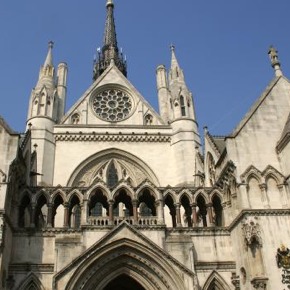
04/03/21. The Lord Chancellor (as Successor to the Legal Services Commission) v Halberstadt-Twum (t/a Cleveland Solicitors) & Anor [2021] EWHC 413. Unlike the County Court, the High Court requires steps to be taken in order to obtain a hearing beyond simply making an application. This fact becomes important when you are seeking to set aside default judgment, as the claimants found out in this case.
Relevant facts
The facts of this case are quite stark. The Defendants ran an immigration firm. The Claimant opened an investigation under its Standard Civil Contract in relation to fraud, which resulted in the prosecution and conviction of the Defendants.
As for the civil case, the allegation in the Particulars of Claim was that there were 5,795 cases where there was no match between claims made by the firm for immigration work done, and records of any immigration application at the Home Office. The total value of payments wrongly made to the firm by the Legal Services Commission, as it then was, was said to be £4,097,768.20. While an Acknowledgment of Service was sent, no Defence came afterwards. Default judgment was entered.
Relevant provisions of the CPR
CPR 13.3 makes it clear that promptness is a key factor in whether the court will set aside default judgment:
“13.3 (1) In any other case, the court may set aside or vary a judgment entered
under Part 12 if -
(a) the defendant has a real prospect of successfully defending the claim; or
(b) it appears to the court that there is some other good reason why -
(i) the judgment should be set aside or varied; or
(ii) the defendant should be allowed to defend the claim.
(2) In considering whether to set aside or vary a judgment entered under Part 12,
the matters to which the court must have regard include whether the person
seeking to set aside the judgment made an application to do so promptly.” (My emphasis).
The Court’s decision
The Court refused to set aside default judgment. Part of the reasoning is interesting, because it will be applicable to all applications to set aside default judgment in the High Court. It is as follows at [22]:
There is not much to say about this regarding lessons to be learnt, as it is rather obvious. If you ever find yourself in the unfortunate position of having to attempt to set aside default judgment, and you are in the High Court, make sure that you act with the required promptness even once the application is filed. Ensure that you are aware of the procedural workings of the court system, and take prompt steps to get a hearing listed as soon as possible.
Image cc Ian Britton
Calculating 3-years - Jim Hester, Parklane Plowden Chambers

01/03/21. A narrow point that occasionally arises is how ‘3-years’ is calculated for the purposes of limitation. In accident cases or in disease cases, for example, where a diagnosis is given on a known date, there will be a precise date when the cause of action accrues and so the limitation clock starts to run.
When is a claim ‘brought’
As a preliminary point, it should be remembered that the date at which the claim is ‘brought’ for the Limitation Act 1980 is not the date of issue, but the date received at court. In Barnes v St Helens MBC [2007] 1 W.L.R. 879 it was confirmed that what is now incorporated into the Civil Procedure Rules within Practice Direction 7A is correct:
“5.1 Proceedings are started when the court issues a claim form at the request of the claimant (see rule 7.2) but where the claim form as issued was received in the court office on a date earlier than the date on which it was issued by the court, the claim is ‘brought’ for the purposes of the Limitation Act 1980 and any other relevant statute on that earlier date.”
Which dates are included and which are excluded from the calculation?
However, say an accident were to occur on today’s date (14/01/2021) when does the Claim Form need to be received at court? Depending on which days are included in or excluded from the 3-year period – it could seemingly be 13/01/2024, 14/01/2024 or 15/01/2024.
This question has, helpfully, been answered in the case of Marren v Dawson Bentley [1961] 2 Q.B. 135.
In Marren it had been argued that the claim was out of time. The claim was issued on November 8 1957, following an accident which occurred on November 8 1954. It was argued by the defendant that the claim should have been brought no later than November 7 1957.
It should be pointed out that this decision was with respect to the Limitation Act 1939. However, the reasoning provided in the Judgment was to provide consistency between a variety of civil and criminal limitation periods. There appears to be no reason why the application of the 1980 Act should be different.
It was concluded that the day the cause of action accrues is excluded from the calculation. However, the day the claim is brought is included. The claim was in time, though a day later would not have been.
Marren (a High Court decision) was approved in the Court of Appeal in Kaur v S Russell & Sons [1972] 2 W.L.R. 147.
Conclusion
So, the answer to the question posed above is…14/01/2024.
However, any claimant solicitor is well advised to send to court well in advance of this. Reliance on Marren v Dawson Bentley should be something of a last resort…
This article was originally published at https://jimhester.me
Image ©iStockphoto.com/serggn
Abuse of Process: Credit hire brought outside of the MOJ portal: Poku v Abedin - Amrit Atwal, Park Square Barristers

01/03/21. Your claim is an abuse of process. No, your application is!
This is an appeal in the matter of Poku v Abedin [2020] by the Claimant against a decision by DDJ Omoregie in which a claim for credit hire was struck out on the grounds that the claim was as an abuse of process. The Claimant had previously raised and settled a personal injury claim through the RTA Portal without including the credit hire charges. The appeal was heard on the 8th October 2020 before Her Honour Judge Backhouse sitting in the RCJ.
Striking out a claim on the grounds of abuse renders any outstanding hire claim null and void against the Defendant. The relevant background of this appeal is similar to many strike out applications. The Claimant, following a road traffic accident on the 2nd May 2017, instructed her solicitors to pursue a claim for personal injury. On the 10th May 2017 there was an intimation by Auxillis to Eldon Insurance, the Defendant’s claims handlers, that there was a claim for credit hire, the Claimant having entered into a hire agreement with the hire company.
On the 23rd May 2017, Eldon Insurance sent an intervention letter. Hire ended on the 25th July 2017. Eldon instructed Validus as their agent to negotiate the hire claim. Auxillis on the 8th August 2017 wrote to Validus requesting payment for the hire charges incurred.
On the 4th September 2017, the Defendant made a payment to E-Sure Insurance, the Claimant’s insurer, for vehicle damages. Her solicitors IMe Law pursued a claim for PSLA and on the 5th September 2017 via the Portal by submitted a CNF.
By the 14th September 2017, the Defendant had admitted liability and by the 25th October 2017 a stage 2 pack was submitted and an offer to settle the PSLA for the sum of £1700 was accepted. On the 27th November 2017 a letter before action was sent by Auxillis and proceedings issued on the 11th December 2018.
What is of great importance here is that in the background the Claimant had at all times notified Eldon and their agents Validus of the hire claim. In both the initial CNF and stage 2 pack the Claimant stated that no hire was being pursued.
The appeal was successful as the DDJ failed in the first instance to consider the entire circumstances of the communications between the parties prior to the CNF. “However, in my judgment, the DDJ did not, despite referring to Johnson v Gore Wood, conduct the necessary broad merits-based judgment, taking into account all the circumstances.” (para 46). There had not only been the intimation of a claim but also an intervention letter and a request by Eldon that the Claimant’s representatives deal with Validus for the hire only.
As such, it was abundantly clear to the Defendant that the CNF and stage 2 pack claim were wrong, and that there was a hire claim. The Court when considering the balancing exercise decided that the Defendant should not benefit from the Claimant’s failures and the letter from Eldon sought to exploit the error. As such the judgement was set aside.
Overall her Honour Judge Backhouse made it clear that the entire correspondence, including the invitation from the Defendant insurer Eldon that the claimant should negotiate the credit hire claim with its agent Validus, should be taken into account when considering whether subsequent proceedings which might be brought in respect of the credit hire are abusive of process; the contents of the CNF should not be considered in a vacuum . Peter Jerman from Principia Law, who attended the appeal hearing advised me Her Honour Judge Backhouse was very interested in the lack of definition within the portal rules about what constituted industry agreement cited in 6.4 of the rules about vehicle related losses being excluded from the ‘Portal’.
In the event the learned judge at first instance was wrong and there was no abuse of process and it would not be proportionate to strike out the claim as the Defendant was not misled in any event.
It is important to consider in abuse of process arguments, firstly whether the parties were made aware of a hire claim prior to settlement, and secondly the terms of the settlement. If there has been correspondence between the parties are actively engaging in narrowing the issues or making offers of settlement for the hire charges then it is vital to ensure that one party does not exploit another party’s failure or error to notify credit charges in a CNF. This is an important judgment with respect to the abuse of process arguments which crop up in credit hire and personal injury claims. It does not address the issue of compromise.
In another first instance case, Bashir v Reith* DJ Harrison was critical of the tactics employed by Eldon.
“It seems to me that that is nothing but Eldon Insurance Services realising the potential error that had occurred, and / or seeking to obtain a windfall when they were aware all along that hire charges did form part of this claim. (Para 30)”
There are further substantial Court of Appeal cases listed involving the same issues this month regarding similar alleged abuse of process in bringing credit hire claims following PSLA claims being settled. Definitely an ongoing saga.
Like Covid, This issue is far from being over.
Amrit Atwal
Barrister
This email address is being protected from spambots. You need JavaScript enabled to view it.
www.parksquarebarristers.co.uk
twitter.com/psqbar
Image ©iStockphoto.com/sellingoutstieglitz
More Articles...
- Hacking Part 36 offers by waiting a day after the relevant period, accepting the offer, and then disputing costs: Pallett v MGN Ltd [2021] EWHC 76 (CH) - Paul Erdunast, Temple Garden Chambers
- Case Summary: B v T - Karen Cawood, Spencers Solicitors
- Traffic accident victim receives £1 million in damages - Andy Shaw, Higgs & Sons
- Devonshires Solicitors LLP v Elbishlawi and Lam Developments Ltd [2021] EWHC 173 (Comm) - Harry Peto, Temple Garden Chambers





![Appeal judge rules that credit hire company has no costs liability following a finding of fundamental dishonesty in personal injury case: RSA v. Fastrack Solutions Limited [2023] 4 WLUK 92 - David Bowden, Erimus Chambers](/content/images/resized/images/stories/carkeys_72_72.jpg)


