News Category 2
Trial Advocacy Fees Recoverable Even if the Matter Settles on the Day of Trial - Francesca O'Neil, 1 Chancery Lane
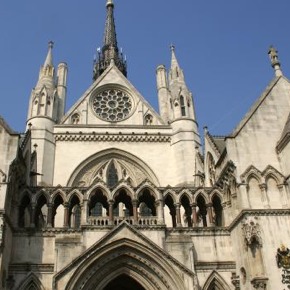 30/06/16. The appeal court has found that, even where a matter settles “at the door of the court” and so no effective trial has taken place, the fixed trial advocacy fee is recoverable under CPR Pt 45 Pt IIIA. The court further found that a matter could be disposed of at trial even if it was by way of settlement rather than judgment.
The fixed costs regime under Part 45 has suffered from many changes and challenges. Lately, the rules about the award of indemnity costs if a Part 36 offer was beaten at trial were changed following the ruling in Broadhurst: thus negating much of what the fixed fee regime was supposed to achieve. In this most recent case, a recorder's refusal to award a fixed trial advocacy fee under the fixed costs scheme when the matter settled “at the door of the court” was successfully challenged on appeal. The appellant had suffered personal injuries following a road traffic accident. A claim was notified under the Pre-Action Protocol for Low Value Personal Claims in Road Traffic Accidents so that the costs were subject to the fixed costs regime set out in CPR Pt.45 Pt.IIIA. A fast track trial was listed and, on the day, the recorder granted more time to the parties following their counsels' indication that they might be able to settle...
Image cc Ian Britton
Keep It Simple, Sheriff: Simple Procedure in the Sheriff Court - Peter Demick & Ben Bestgen, Brodies LLP

29/06/16. Riding on the winds of change in Scotland’s civil courts reforms (with our special focus on personal injury), we have already seen the creation of the All-Scotland Sheriff (Personal Injury) Court, a new Sheriff Appeal Court and the increase of the jurisdictional limit for bringing cases in the Court of Session – our High Court - to £100,000.
Readers may recall that on 22 March 2016 our colleague Sarah Donaldson gave a quick introduction to the planned introduction of the Simple Procedure Rules. Now that the official consultation has ended and the Scottish Civil Justice Council published its Report, November 2016 will see the introduction of the new Simple Procedure for claims of up to £5,000 in the Sheriff Courts, Scotland’s equivalent to the County Courts.
This means that the Summary and Small Claims procedures, in force since 2002, will soon be replaced by the Simple Procedure. For complex claims, including those relating to personal injury, we will need to wait until early 2017 for the implementation of the Simple Procedure (Special Claims) Rules.
“What is simple about Simple Procedure?” you might ask. After all, the present rules seem to work ok. Here is why the change is introduced:
In the 14 years that the current rules have been in operation, it was found that even though they were originally aimed at making the use of the courts in small value claims easier, they did not always do so. This is especially the case for party litigants (known as “litigants in person” south of the border) who often wish to argue low-value cases themselves instead of hiring a lawyer at a cost disproportionate to the claim’s value.
The rules and language to date have been...
Image ©iStockphoto.com/
Impact of 'Brexit' on Personal Injury Claims - Flora Wood, Ashfords

22/06/16. Claimant and Defendant lawyers are used to applying many EU-based regulations and Directives to personal injury claims. How could Brexit affect legal remedies for UK citizens?
EU Directives are legal acts provided for in the EU Treaty. They oblige EU Member States to transpose them into national law within a set deadline. They set out minimum requirements and fundamental principles, often then outlined into more specific EU Regulations.
EU Regulations are fixed into law by Statutory Instruments. These are a form of legislation that allow the provisions of an Act of Parliament (e.g. the Health and Safety at Work Act 1974) to be implemented without Parliament having to pass a new Act.
Some examples of how the EU Directives and Regulations currently apply to personal injury claims are as follows:
Accidents Abroad: Directives exist to protect victims of uninsured or untraced drivers when they suffer an accident abroad. Regulations also exist to allow accident victims to sue Tour Operators when they suffer an accident abroad - effectively bringing the claim back to be heard in the UK. The European Health Insurance Card scheme gives the right to access state-provided healthcare during a temporary stay in another European Economic Area. This can be very helpful for holiday accident victims, regardless of any travel insurance cover they may have.

Health and Safety at Work: For example, the UK passed the 1974 Health and Safety at Work Act following on from the European Framework Directive on Safety and Health at Work adopted in 1989. That Directive was a substantial milestone in improving safety and health at work. It guarantees minimum safety and health requirements throughout Europe and launched the framework for our more recent health and safety legislation. For example, the "six pack" of work-related Regulations that came into force in 1992 flowed from that Directive.
Faulty goods: Directives and Regulations also provide consumer protection when buying goods and services. For example, product safety is covered by the Consumer Protection Act 1987 (and its associated regulations) which was passed following an EU Directive in 1985 and provides strict liability against producers for defective products.
Assuming the Referendum majority vote is to leave the EU, the UK would then notify the European Council of its decision to leave, pursuant to Article 50(2) of the Treaty on European Union, and then start negotiating a withdrawal agreement with the EU. The aim would be to reach an agreement within two years, but if no agreement is reached the withdrawal would become effective in any event (unless an extension of time can be negotiated).
A two year exit is not long. In the interim it would be difficult for businesses to know how they will be affected in the medium to long term and strategy planning becomes difficult for employers, businesses and public sector organisations alike.
If Britain were to leave the EU the opportunity arises to amend our legislation. The question is what political pressure will exist to amend current laws that are tied to the EU? Some will see many regulations provide unnecessary "gold plated" protection for workers and consumers which stifle competition and growth. The current UK government has, for instance, already stated that it wants to reduce existing EU protections such as removing the requirement for employers to provide eyesight tests for display screen equipment users, or be required to produce written risk assessments for small, low-risk businesses.
Some, on the other hand, will regard EU-led employment protection as a vital cornerstone of our current labour laws.
Economic pressure will be strong to keep full access for the UK to the Single Market. To achieve this, we would most likely have to adopt EU regulations and standards. Equally, if the UK wanted to enter into any kind of customs union with the EU, this would be subject to compliance with various areas of EU regulation, which could include some of the regulations that affect personal injury claims.
Whatever your view, a "Brexit" will mean that the decision to make or change legislation will "come home" to the UK. Changes will be based upon both political and economic forces, propelled by the climate in the UK at any particular time.
The law should always aim to provide clarity in relation to the rights of both victims and compensators in personal injury claims. Uncertainty continues to play a large role in the referendum debate and the long term future of our domestic laws.
Flora Wood
Partner
Ashfords
Image ©iStockphoto.com/Ramberg
Trial by Ambush? - Ella Davis, 1 Chancery Lane

24/06/16. In Hayden v Maidstone & Tunbridge Wells NHS Trust [2016] EWHC 1121 (QB) Foskett J, albeit with “considerable misgiving”, allowed a Defendant to rely on surveillance footage that had been disclosed so late that it caused the trial date to be vacated. The decision is not so much of interest because of its outcome but for the judge’s more general comments on the issue of when surveillance evidence might properly be served.
Facts
It was held that from May 2015, when their pain management expert expressed the view that it was possible the Claimant was “grossly exaggerating for the purposes of financial gain”, the Defendant had every reason to commission surveillance evidence. Its failure to do so until January 2016 was unexplained and unreasonable. A series of lengthy but less culpable delays thereafter meant that the edited surveillance was finally served by post on 24 March, Maundy Thursday and received on Tuesday 30March. The Defendant’s application to rely on it came before Foskett J on 8 April who decided that the Claimant should have time to consider her position and that therefore the trial due to commence in the week beginning 11 April had to be vacated.
When it came back before him later that month he considered the events leading to that outcome and decided that the interests of justice required the evidence to be admitted. However, he declined to reserve costs to the trial judge holding that this was the “clearest possible case in which the order should be that the Defendant should bear the costs thrown away by the vacation of the trial date on the indemnity basis”. The Defendant was also ordered to pay the costs of the Claimant’s experts considering the surveillance, again on the indemnity basis...
Image ©iStockphoto.com/Kuzma
Clean Air: A Claim Under Article 1? - Ian Miller, 1 Chancery Lane

In February 2013 nine-year-old Ella Kissi-Debrah from Hither Green in South London died after suffering a severe asthma attack. “Can the courts be used to establish that we have a human right to clean air?” asked Nick Robinson on the Today Programme this morning. A report by Royal College of Physicians has apparently linked 40,000 deaths to pollution each year. A successful case against the government would arguably put the government under considerable pressure as well as resulting in justice for affected families.
Ella’s mother and her lawyer were interviewed on the programme. Ella had very severe asthma. According to the Today Programme, nitrogen dioxide levels around their home on the South Circular are double the EU legal limit. Her lawyer, Jocelyn Cockburn, a partner at Hodge Jones & Allen, commented that the coroner had not looked into pollution as a cause of death. The immediate objective, she said, was to try and get a wider investigation into pollution and whether it contributed to Ella’s death. She is seeking to do this by bringing a claim against Lewisham Council and the Mayor of London. She said that they were considering whether or not a case could be brought against the UK government under Article 1 of the European Convention on Human Rights (the Right to Life) on the basis that the government knew that Ella was at immediate risk.
There is clearly a long way to go in terms of establishing causation and a claim, but this will be one to keep a close eye on. The full interview can be heard on http://www.bbc.co.uk/programmes/b07dkk07#play
Ian Miller
1 Chancery Lane
Image cc flickr.com/photos/zongo/13599753564
More Articles...
- The Decision in Parker v Butler [2016] EWHC 1251: The Applicability of QOCS to Appeals - Craig Fisher, 7 Harrington Street Chambers
- PI Practitioner, June 2016
- QOCS: Applies to Appeals? - Thomas Crockett, 1 Chancery Lane
- Editorial: Further Reflections on Fundamental Dishonesty - Aidan Ellis, Temple Garden Chambers





![Appeal judge rules that credit hire company has no costs liability following a finding of fundamental dishonesty in personal injury case: RSA v. Fastrack Solutions Limited [2023] 4 WLUK 92 - David Bowden, Erimus Chambers](/content/images/resized/images/stories/carkeys_72_72.jpg)


