News Category 3
Case Summary: E v I - Karen Cawood, Spencers Solicitors

15/02/21. Case Name
:
E v I
Court Name
: County Court Money Claims Centre
Accident Date: 23/01/2018
Settlement Date:
20/06/2020
TOTAL GROSS SETTLEMENT: £57,500.00
Background
The file was a stress at work claim. An appointment had been made for the claimant to see a Probation Service User. During the appointment the gentleman in question was verbally aggressive and threatening. He began swearing and shouting and suddenly jumped and threatened to smash the room up by picking up the chair he had been sat on. He thumped the door with his fist and intimidated the claimant and her colleague. The claimant pushed the panic alarm button to alarm other employees that assistance was required however no one came. She pressed the alarm again but still no one arrived to help.
The claimant was referred for treatment for possible post-traumatic stress disorder as a result of the incident. The claimant was off work for a period of around six months and eventually returned to work.
Liability
Primary liability was admitted.
Quantum
The case settled by Part 36 offer. The amount was a global sum and no breakdown was given, however, it is estimated by the claimant solicitors that £20,000 was for special damages and £37,500 for general damages.
Solicitors for the Claimant
:
Karen Cawood of Spencers Solicitors Limited
Solicitors for the Defendant
: Plexus Law
Image ©iStockphoto.com/BrianAJackson
Pinnegar v Kellogg and ICI - Jim Hester, Parklane Plowden Chambers
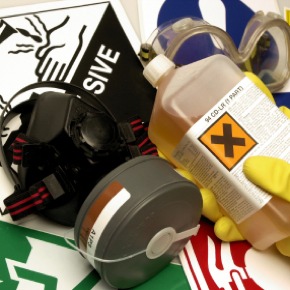
03/02/21. This case is the latest in a series where the issue as to the reliability and credibility of historic witness evidence has been raised. I have written about similar cases of Bannister v Freemans and Smith v Secretary of State for Transport in previous articles.
In this case, the Deceased (the case being brought by his daughter) was employed by the First Defendant as a pipe fitter/ plumber at the Second Defendant’s Wilton site on Teesside.
The Defendants conceded that breach of duty would be established if the factual case as to the Deceased’s employment was made out. Quantum was agreed, subject to liability. The matter hinged, therefore, on the Deceased’s evidence as to asbestos exposure, in the form of a witness statement drafted shortly before his death. There was also a small amount of documentation from the site from that era. The Deceased worked at the premises for only a few months during the tax year 1966/ 67.
Historical Evidence – Assessment
The Judge noted other cases which have raised similar issues including Smith. The Judge noted that in assessing the evidence of the Deceased, the following factors should be considered:
1. That the Deceased had been asked to recall employment some 50 years a prior to his diagnosis of mesothelioma.
2. That he was very ill when he made the witness statement.
3. That the witness statement was prepared with the assistant of a solicitor. Also that there were probably discussions before the statement was prepared and signed. This was considered to be an inevitable part of litigation.
4. The Claimant’s refusal to disclose any attendance note between the Deceased and his solicitor was not given any weight. To do so would be to go behind legal privilege.
5. The Deceased was aware of the purpose of the witness statement, that was to give evidence for the case.
It was noted that prior to making this statement, the Deceased had also made an application for Industrial Injuries Disablement Benefit. This also gave a brief description of his exposure to asbestos.
The Court’s Factual Findings
The first issue was to establish exactly when the Deceased worked and where. On the site, documentary evidence showed that there were some plants which were completely asbestos free. Other plants on site used materials not containing asbestos at some points in time.
On analysis of the facts of this case, which are largely specific to the ICI Wilton plant, the Claimant was able to make out that the Deceased worked at a time and a place where asbestos was probably used by pipe laggers.
The court then considered the specific nature of the Deceased’s work. It considered as a pipe fitter, he was not exposed to asbestos from his own work. However, he would have been had he been working in the vicinity of pipe laggers.
The court accepted that the pipes would have to be fully fitted and tested before lagging could be conducted. However, the nature of the plant was such that one pipe maybe being fitted, whilst another in the vicinity was being lagged.
Exposure
The court finally considered the extent of the exposure. Again, the court made a number of observations which are useful in relation to many such a historic cases:
-
That the general description by the Deceased of his working history appeared to be accurate and consistent with the his daughter’s recollection that the Deceased had a good memory as to his work history.
-
The lack of details as to the nature and duration and frequency of exposure was to be expected of a person recalling events some 50 years prior.
-
The account was consistent with a brief account made in support of the Industrial Injuries Disablement Benefit claim.
-
That in matters of the detail, some were confirmed by documentary evidence in relation to the nature of the premises.
-
That this was the only point during the Deceased’s lifetime where he did this particular type of work, that is working alongside laggers.
-
That a description of watching laggers tip large asbestos bags into drums was not just a vague recollection. This was an actual memory of something which he witnessed.
-
There were matters of detail which had no relevance to the claim but showed that the Deceased had a good recollection. For example, that pipework belonging to the First Defendant was always painted green. Also that there was some animosity between pipefitters and laggers. There was no reason for this evidence to be misremembered or fabricated.
-
Although the work described may have been informed by discussions with solicitors, that is unremarkable. The important feature is that a statement of truth was signed.
-
The Defendants’ expert confirmed that description of what the laggers were doing was consistent with the practise at the time.
Accordingly, the Judge found that the claim was made out.
Conclusion
This is another case which is useful reading for those practising in this area.
Relevant factors are set out above, and do not just consist of the basics such as duration, frequency and extent of exposure. Background information, especially if consistent with any available documentation, may bring (or if inconsistent detract from) credibility to the evidence on the whole.
Judgment in full: Pinnegar v Kellogg International Corporation and ICI Chemicals & Polymers Limited [2020] EHWC 3431 (QB).
This article was originally published at <a href="/content/https://jimhester.me">https://jimhester.me</a>
Image ©iStockphoto.com/Eagle_373
How Using A Lawyer Can Help Your Personal Injury Claim
Getting involved in an accident can change the trajectory of your life. One moment you are trying to catch up to a promotional interview or a social gathering, the next you are all bandaged up with your vitals being monitored. Accident and accident injuries take a toll on their victims. Many people who have been involved in accidents in the USA know that the cost of recovery can run into hundreds of thousands of dollars or more. Amidst all of these, one question is important; Who is at fault? If you or a loved one has been involved in an accident and suffered injuries, speaking to a Seattle Injury Law expert is recommended.
Personal injury lawyers are familiar with personal injury law and you can trust them to come to your legal aid in such a time like this. If you wish to pursue compensation for the damages suffered due to the other party’s negligence, then hiring a lawyer will prove essential in establishing your case. Wondering whether or not you need a lawyer to represent you in a personal injury claim? Below are some of the help your personal injury lawyer can offer.
Experience
Victims of personal injury accidents and their families are often thrown into confusion in the aftermath of the accident. Being a traumatic experience, victims may find it hard to process their emotions and thoughts. Taking the right steps at this stage can shape the future of your personal injury claim. When a personal injury lawyer is involved, you can expect them to take the right legal steps on your behalf while also breaking the case down into simple bits. Your personal injury lawyer will access the details of the accident and the facts of the case. Your lawyer will also answer all questions that you may have while initiating the personal injury claim process on your behalf.
With a personal injury lawyer in your corner, you can rest easy knowing that you have the experience, skills, and knowledge needed to go up against insurance companies and get the deserved settlement.
They Are Experienced Negotiators
Personal injury lawyers want the best for their clients. This means that they take all of the possible legal steps to ensure that the full losses suffered by their client are calculated. Personal injury lawyers are also aware of how notorious insurance companies can be and they demand the highest possible amount in compensation. As skilled negotiators, accident victims can rest easy knowing that their attorneys will negotiate the best amount in compensation for the losses they suffered.
Personal injury lawyers can also persuade you to ignore the first settlement offer presented by the at-fault party’s insurance provider. This is usually because the first offer is often lower than the actual worth of the damages suffered by the victim. Accident lawyers compare the losses, including the past, present, and future medical costs, rehabilitation costs, lost wages, and more to arrive at the right amount in damages.
They Can Help Victims Seek Medical Attention
Accident victims sometimes suffer catastrophic injuries that require them to seek specialists for help. Accident injury lawyers have years of experience and the right connection. They may be able to recommend specialists in the specific area where the accident victim needs help.
In most cases, personal injury lawyers do this to ensure that the claim case remains valid. Insurance companies may take drastic steps against the accident victim if it is proven that the victim did not seek the appropriate medical help. Personal injury lawyers can also help accident victims to negotiate a payment plan for their health and recovery needs.
They Help Victims Make Better Decisions
A lot of things can go wrong in a personal injury claim case. Insurance companies are always interested in new ways to deny the accident victim’s claim. Accident victims can keep their case alive by enjoying advice from their attorneys. Personal injury lawyers have years of experience dealing with insurance companies and can advise clients on the dos and don’ts of personal injury claims.
For example, accident victims may be unaware that the internet can play a huge role in the outcome of their case. Insurance companies may investigate the accident victim’s social media pages and online profile to gather information that can be used against them. Personal injury lawyers can advise their patients on ways to avoid such occurrences.
They Offer Legal Coverage
The legal process involves a lot of steps that may be too complicated for accident victims to follow up with. Personal injury lawyers, however, are familiar with those steps and are happy to help. Accident victims can rest better knowing that their case is being handled by a personal injury lawyer.
In addition, not all cases are settled out of court. This means that your personal injury lawyer may decide to take your case to trial if he or she feels that you may have been cheated with the settlement offer presented. With court trials, you will get to appreciate the good work your lawyer is doing to get you the best outcome.
They Help Accident Victims Get Faster Compensation
Accident victims are at a higher risk of having their personal injury claims denied when they choose to represent themselves. There is a high chance that the personal injury claims case may also be frustrated by the insurance company in a bid to protect their pocket. With a personal injury lawyer, you not only stand a better chance of winning compensation but you can win more money for your losses. Personal injury lawyers will also make sure that the case is handled diligently so that it is concluded as fast as possible.
They Give You Peace Of Mind
As an accident victim that is battling with injuries and recuperating, it may be hard to find time to pursue compensation for your damages. Having a personal injury lawyer allows you to rest easy while giving you peace of mind that your case is in good hands. Most personal injury lawyers now offer contingency fee services to their clients. With this agreement, accident victims won’t have to pay a dime in legal fees until their case is won. This can help you to focus more on your health while trusting your accident lawyer to act in your best interest.
Azam v University Hospital Birmingham NHS Foundation Trust [2020] EWHC 3384 (QB) - Paul Erdunast, Temple Garden Chambers

30/01/21.This case is a helpful reminder that if a party wishes to rely on prejudice against it, it should provide evidence of such prejudice. This applies in numerous situations, such as applications for relief from sanctions, arguments about resiling from admissions, and in this case, which concerned whether to extend limitation to allow a claim being issued roughly 20 years out of date.
Furthermore, Saini J in this case provides a deliciously tight summary of the principles relevant to appeal of the exercise of discretion.
Relevant facts
The Claimant sought to make a clinical negligence claim regarding gynaecomastia surgery that took place on 9 March 1996. HHJ Rawlings on 2 September 2019 permitted him to proceed with his claim, making an Order under s33(1) Limitation Act 1980 following the trial of a preliminary issue regarding limitation. s33(1) Limitation Act 1980 provides the power to allow an out-of-time claim to proceed if it would be equitable to do so, having regard to the degree of prejudice to the Claimant if the action does not go ahead as compared with the Defendant if it does. s33(3) Limitation Act provides several further matters which the court ‘shall’ have regard to.
The Defendant appealed, relying on the prejudice that would be faced by the Trust in defending the claim, suggesting that HHJ Rawlings had failed to perform the necessary balancing exercise of the factors in s33 Limitation Act 1980.
Decision of Saini J
Appealing the exercise of discretion
First, Saini J summarised the law as to appealing the exercise of discretion in a way perfectly designed to be packaged into skeleton arguments in...
Image ©iStockphoto.com/STEFANOLUNARDI
Asbestosis: assessing damages on a provisional basis - Jim Hester,Parklane Plowden Chambers

26/01/21. Hamilton v NG Bailey Limited [2020] EWHC 2910 (QB) provides a useful view of how a court might approach quantum in an asbestosis case when considering damages on a provisional basis rather than as a full and final settlement. Those who deal regularly with such cases would be well advised to read the judgement in full.
The Claim and Diagnosis
The Claimant was employed between 1968 and 1981 by the Defendant as an electrician. Liability was admitted and the Claimant’s medical evidence was not challenged. Accordingly, the claim came before the court only on the matter of quantum of damages alone
The Claimant was aged 74 at the time of the trial. He had provided witness statements saying that he was now breathless when gardening, having previously been a very keen gardener. He described getting short of breath and having a tightness in his chest after about 30 minutes or so of gardening. He also said that he became breathless when strenuously exercising.
It appeared that the symptoms began during the second half of 2018, with symptoms getting worse until early 2019 and then stabilising. The medical expert commented that there was a slight reduction in exercise capability and assessed the Claimant as having about a 10% disability from the asbestosis. It was sufficient to cause breathlessness on prolonged or strenuous exertion. It was the cause of a progressive reduction in activities of daily living and recreation. The Claimant remained well and active in general terms though.
The diagnosis was that the Claimant would acquire an additional 5% respiratory disability in the course of his lifetime, possibly as high as 10% more. The expert considered that there was a 5% risk of more a severe and rapidly progressing asbestosis which would be sufficient to cause life-limiting effects.
There was a 3% probability of developing malignant pleural mesothelioma. There was also a 3% risk of lung cancer, of which two-thirds would be asbestos related.
The Level of Disability
The judge’s first role was to assess the precise level of disability. The judge found that the expert’s description of “around 10%” really meant “10%” for the purposes of the guidelines. It was inevitable that such a figure was an approximation and not exact.
The judge accepted what the Claimant has said about his condition in his witness statements and the effects caused.
Judicial College Guidelines:
The judge noted the relevant brackets of the Judicial College guidelines being, Chapter 6 (C) – Asbestos-Related Disease:
(c) Asbestosis and pleural thickening-where the level of disability attributable to asbestos will be in excess of 10% causing progressive symptoms of breathlessness by reducing lung function. Awards at the lower end of the bracket will be applicable where the condition is relatively static. Higher awards will be applicable where the condition has progressed or is likely to progress to cause more severe breathlessness. Awards at the top end of the bracket will be applicable where mobility and quality of life has or is likely to become significantly impaired and/or life expectancy significantly reduced. This is a wide bracket and the extent of respiratory disability will be highly significant with disabilities of 10-30% being at the lower end, 30-50% in the middle, and in excess of 50% at the higher end. £32,780 to £90,300 (£36,060 to £99,330)
(d) Asbestosis and pleural thickening-where the level of respiratory disability/lung function impairment attributable to asbestos is 1-10%. The level of award will be influenced by whether it is to be final or on a provisional basis and also the extent of anxiety. £12,860 to £32,780 (£14,140 to £36,060)
These were referred to as the upper and lower brackets.
It was noted that the level of award would be influenced as to whether it was on a final or a provisional basis and the extent of any anxiety.
The judge noted the difference between a provisional damages and a full and final award, noting that the provisional damages award at this stage would be lower, given that it includes a possibility of return for court for more serious conditions.
Approaching an Award on a Provisional Basis
The Defendant suggested that the judge come to a conclusion for PSLA on a full and final basis and then reduce it by the expected future damages for the more serious return conditions. For example, mesothelioma might attract in a wall of about £95,000 and therefore 3% of that would result in a £2,850 reduction.
The judge noted that there was authorities in support of such an approach. Likewise, the Claimant pointed out that there were cases approaching it the other way.
The judge considered that for the right case, either approach might be appropriate. However, on this case, the arithmetic approach advocated by the Defendant was found to be a sensible one.
The court also considered how the JC brackets dealt with both provisional damages and full and final awards at the same time as considering the percentage disability. The judge found, however, that the guidelines were intended to be a continuum between the two brackets. If each bracket had their separate percentages and each contained both final and provisional awards, there would be, in effect, a jump at around the border (if the top of the lower bracket was for a 10% disability on a full and final basis, and the bottom of the upper bracket was for a 10%+ disability, but on a provisional basis). The Judge did suggest that those drafting the guidelines may find it useful to clarify how to approach the guidelines.
Each of the parties submitted previously decided cases though each suggested caution in relation to older cases – some approaching almost 20 years.
The Correct Guideline
The judge considered that clearly the diagnosis fell around the borderline of the two guidelines. However, since the lower bracket suggested awards from 1 – 10% disability and the upper bracket suggested that it was ‘in excess of 10%’, the lower guideline should apply.
The fact that the Claimant’s condition was likely to progress did not help him because the wording of the upper bracket suggested that it the diagnosis should be in excess of 10% and causing progressive symptoms off breathlessness by reducing lung function. Therefore, it assumes both parts – both in excess of 10% and with progressive symptoms.
The judge considered, therefore, where in the lower bracket the Claimant fell.
Where in the Guideline
First of all, it was considered that the younger that someone gets the condition the greater the award. The range of the cases brought was from individuals between their 60s and up to 80 years old. The claimant being aged 71 or 72 at the time of onset of symptoms, was considered to be in the middle of the range.
There was no evidence of particular anxiety for the Claimant, although that was the case for many other cases cited.
The judge considered the fact that the symptoms were worst when gardening, although this did appear to be the Claimant’s primary hobby. The judge noted that if there were more significant symptoms, then the 10% figure would itself be greater.
The judge, therefore, placed the Claimant towards the top end of the bracket and stated that he would have given a figure of around £35,000 if this was a full and final basis.
Adjustment for a provisional award
However, undertaking an arithmetic approach it was agreed that this would reduce the sum by about £5,000. This would come to a figure of £30,000.
However, the judge considered that this was on the low side in consideration with other cases and, therefore, came to a conclusion that the correct figure in this case was £32,000.
There were also some modest special damages claimed.
Conclusion
This is a useful case for practitioners both to establish where a 10% disability would lie in relation to either upper or lower brackets of the Judicial College guidelines and also how a judge might approach award on a provisional basis. Ultimately, despite a seemingly arithmetical approach to adjusting the award from a final award figure to a provisional award, that itself was adjusted in line with the Judge’s own view of the appropriate amount.
This article was originally published at https://jimhester.me
Image ©iStockphoto.com/alfiofer
More Articles...
- Case Summary: W v UHD - Karen Cawood, Spencers Solicitors
- FREE CHAPTER AND FOREWORD from 'A Practical Guide to the Small Claims Track - 2nd Edition' by Dominic Bright
- Case Summary: M v L - Steven Barke, Spencers Solicitors Limited
- FREE CHAPTER from ‘A Practical Guide to Claims Arising from Fatal Accidents – 2nd Edition’ by James Patience





![Appeal judge rules that credit hire company has no costs liability following a finding of fundamental dishonesty in personal injury case: RSA v. Fastrack Solutions Limited [2023] 4 WLUK 92 - David Bowden, Erimus Chambers](/content/images/resized/images/stories/carkeys_72_72.jpg)


