Erra in Law - Richard Johnson, Browne Jacobson LLP
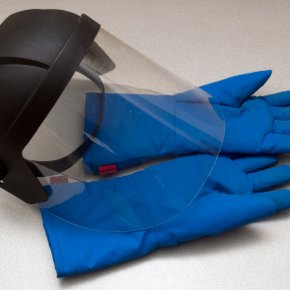
10/08/15. Following the introduction of Enterprise and Regulatory Reform Act 2013 “ERRA” the new landscape for personal claims post 1st of October 2013 is that such claims are, save for limited exceptions, dependent upon whether the claimant can prove negligence by proving breach of duty and foreseeable risk of injury.
The Act reverses section 47 of the health and safety at work act 1974 which provided that a breach of duty imposed by health and safety regulations was actionable as a civil claim.
Section 69 (3) (2) of ERRA states:-
“Breach of the duty imposed by statutory instrument containing (whether alone or with other provision) health and safety regulations shall not be actionable except to the extent that regulations under this section so provide.
Breach of a duty imposed by the existing statutory provision shall not be actionable except to the extent that regulations under this section so provide (including by modifying any of the existing statutory provisions)”
The Act makes clear that the section is not retrospective. For those doing disease work the relevant date will be the date of the breach. Section 69(10)
Not all disease cases are historical and these changes will still be relevant e.g The Control of Substances Hazardous to Health Regulations 2002. Civil liability is now excluded for breaches of these regulations. The situation now arises that where there is a continuing alleged breach with the same employer a different approach will be applied for alleged breaches pre-and post-1st October 2013. Will the Courts follow the cases of say Dugmore v Swansea NHS Trust 2002 EWCA a case involving a latex allergy which was decided following the introduction of the COSHH Regulations, or will parties have to consider pre-COSHH cases?
In Dugmore the court found not one of the employer's was in breach of regulations 7 (1)of the 1988 COSHH Regulations relying upon the decision in Williams v Farne Salmon Trout Ltd 1998 SLT 1329, which involved occupational asthma as a result of exposure to micro-organisms in salmon. In both cases the court referred to the 1988 regulations as imposing an absolute duty without the requirement to establish that the injury was reasonably foreseeable.

Given the new found importance of the common law following ERRA, It is worthwhile reminding ourselves what the common law has to say about the obligations on the employer as set out in the case of Stokes v Guest which was approved by the House of Lords in Barber v Somerset County Council 2004 UKHL
“The overall test is still the conduct of the reasonable and prudent employer, taking positive thought for the safety of his workers in the light of what he knows or ought to know; where there is a recognised in general practice which has been followed for a substantial period in similar circumstances without mishap, he is entitled to follow it, unless in the light of common sense or newer knowledge it is clearly bad; but, where there is developing knowledge, he must keep reasonably abreast of it and not be slow to apply it; and where he has in fact greater than average knowledge of the risks, he may be thereby obliged to take more than the average or standard precautions. He must weigh up the risks in terms of the likelihood of injury occurring and the potential consequences if it does; and he must balance against this the probable effectiveness of the precautions that can be taken to meet it and the expense and inconvenience they involve. If he is found to have fallen below the standard to be properly expected a reasonable and prudent employer in these respects, he is negligent”.
In looking at disease cases the courts have confirmed they will judge employees by the standards of the time of the alleged breach and not apply stricter standards that may have come in to force at a later time. See Baker v Quantum Clothing Group PLC 2009 EWCA. Historic breaches of duty will, therefore, not be affected by this change in the law.
However, what about current legislation which impacts upon disease cases? Statutory duties may be evidence of good practice which a reasonable employer should adopt see Bux v Slough Metals Limited 1974 which involved a statutory duty to provide goggles. In considering the relationship with the common lawLJ Stephenson stated:-
“There is in my judgement no presumption that a statutory obligation abrogates or supersedes the employer's common law duty or that it defines or measures his common law duty either by clarifying it or by cutting it down-or indeed by extending it….. The statutory obligation may exceed the duty at common law or it may fall short of it or it may equal it”.
Postscript
The matter is further complicated by EU legislation.
“In applying the national law, whether the provisions in question were adopted before or after the directive, the national court called upon to interpret is required to do so, so far as possible, in the light of the wording on the purpose of the directive in order to achieve the result pursued by the latter and thereby comply with the third paragraph of Article 189”- Marleasing S A v La Commercial Internacional de Aliementacion S A (European Court of Justice)
The English courts therefore under duty in their capacity as all organs of the state to seek to bring English law into line with European law see Hide v Steeplechase Co Ltd (Cheltenham Racecourse) and others 2013 EWCA.
European directives in relation to health and safety matters may be relied upon in claims against an “emanation of the state”.
It is however worth considering that the regulations that are enacted may sometimes go further than the Council directive upon which they are based. A case of strict liability often quoted is that of Stark v Post Office 2000 EWCA, which involved a breach of 6 (1) the Provision and use of Work Equipment Regulations 1992,, although as was noted at trial the Council Directive 89/655 which led to this Regulation being brought into force did not impose strict liability.
While directives will, therefore, be relied upon in relation to the issue of common law rights, they will also be relied upon in claims directly against public bodies. The definition of “emanations of the state” is sufficiently wide to encompass a wide range of employers
Public health bodies- Marshall v Southampton and South-West Hampshire Area Health Authority 152/84 1986 QB
It is too early to see how the Courts will approach these cases. We may see a return to allegations and pleadings that were more often relied upon prior to the introduction of the 6 pack Regulations such as the Employers Liability (Defective Equipment) Act 1969
Very often cases are not litigated until close to the three-year limitation period and it remains to be seen what approach the judiciary will take to these difficult issues.
Richard Johnson
Browne Jacobson LLP
Image ©iStockphoto.com/Gannet77





![Appeal judge rules that credit hire company has no costs liability following a finding of fundamental dishonesty in personal injury case: RSA v. Fastrack Solutions Limited [2023] 4 WLUK 92 - David Bowden, Erimus Chambers](/content/images/resized/images/stories/carkeys_72_72.jpg)


