News Category 3
Summary of Recent Cases, August 2017

15/08/17. Here is a summary of the recent notable court cases over the past month. You can also receive these for free by registering for our PI Brief Update newsletter. Just select "Free Newsletter" from the menu at the top of this page and fill in your email address.
Summary of Recent Cases - Substantive Law
Redman v Zurich Insurance PLC and ESJS1 LTD [2017] EWHC 1919 (QB)
The Claimant brought a claim under the Third Parties (Rights Against Insurers) Act 2010 alleging that her husband's death had been caused by asbestos exposure whilst he was employed by the 2nd Defendant. Her husband had died on 5th November 2013. The Second Defendant was voluntarily wound up on 30th January 2014 and was...
Image ©iStockphoto.com/spxChrome
Hospital Misdiagnosis of Foot and Ankle Fractures - Sylvia Taylor, Tilly Bailey & Irvine
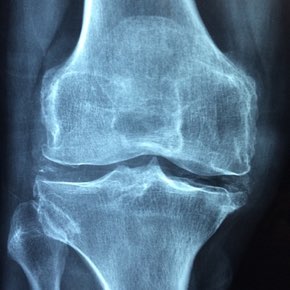
14/08/17. Foot and ankle injuries are a common place reason for attending the Accident and Emergency Department or Minor Injuries Unit. However, not everyone with an ankle and foot injury will need an x-ray.
In 1992 the Ottawa Ankle and Foot Rules were devised by an emergency physician in Canada, who wanted to find a way to cut down on the number of x-rays. The original rules recommended ankle x-rays if:-
-
55 years of age or over,
-
Were unable to bear weight for four steps both immediately and at the time of evaluation,
-
Experienced bone tenderness at the posterior edge or inferior tip of the lateral malleolus,
-
Had bone tenderness at the posterior edge of inferior tip of the medial malleolus.
An x-ray of the midfoot was recommended for patients with bone tenderness at the base of the fifth metatarsal, cuboid or navicular.
Currently the rules to determine when x-rays are required are set out below.
An ankle x-ray should be performed when:-
-
There is an inability to weight bear, both immediately after the incident and in the casualty department,
-
When there is bone tenderness at the edge or tip of the lateral malleolus,
-
When there is bone tenderness of the posterior edge or tip of the medial malleolus.
A foot x-ray is required if there is:-
Image: public domain
J C and A Solicitors Ltd v Andeen Iqbal & Another [2017] EWCA Civ 355 - Jim Knight, Harmans

11/08/17. The Court of Appeal unanimously agreed that no obligation to repay Stage 1 fixed costs (£400 + VAT) is imposed by the RTA Protocol or by the CPR upon Protocol Claimants merely because, after the conclusion of Stage 1, they take no steps to pursue their claim under Stage 2.
The RTA Protocol came into effect in its original form on 30 April 2010, and was substantially up-dated and revised with effect from 3l July 2013, in the light of the Jackson reforms.
The appeal concerned the RTA Protocol in its original form, which continues to apply to claims submitted between those two dates.
The appeal involved three materially identical RTA claims which proceeded under the RTA Protocol. In each case, the defendant’s insurer admitted liability and paid the claimant the Stage 1 fixed costs. Thereafter, none of the three claimants took any further steps to advance their claims, in the manner prescribed for Stage 2.
In each case the defendant’s insurers commenced proceedings in the Small Claims Track of the County Court for recovery of the Stage 1 fixed costs, both from the relevant claimant and from their solicitors, namely the appellant J C and A Solicitors Limited (“JC&A”). The insurers in each case were EUI Limited (“EUI”) trading under the Admiral name.
Before the County Court Judge in Cardiff, the claims were advanced primarily upon the basis that the...
Image ©iStockphoto.com/DNY59
If Only I Had Known I Would Have… Consent to Medical Treatment and the Problem of Hindsight - Paul Sankey, Enable Law

09/08/17. A recent decision (Lucy Diamond v Royal Devon & Exeter NHS Foundation Trust [2017] EWHC 1495 (QB)) is another example of how the law has changed following Montgomery v Lanarkshire Health Board (see http://bit.ly/2uL8zXv). It nevertheless also shows how difficult it is for patients to succeed in consent claims.
What happened?
The Claimant was a 45 year old woman. She was single and had one child. She developed back pain and in December 2010 had spinal surgery at the Royal Devon & Exeter Hospital. At follow up a month later her surgeon failed to diagnose an incisional hernia. As a result her surgery was delayed by 2 months. For that she recovered modest damages of £7,500. However, the more significant issue in her claim was the advice she was given and whether she had consented to the risks of a mesh-based repair.
In May 2011 a general surgeon advised open surgery with a mesh-based repair and abdominal wall reconstruction. The operation was done in June 2011. Unfortunately the operation left her with complications of swelling and pain. Some 3 years later she had another operation. The mesh was removed, the hernia repaired with a single stitch and she had a full abdominoplasty.
At the time of the first hernia repair she had been single. She subsequently started a relationship with a partner and wanted to have children. Unfortunately an effect of the mesh surgery was to create significant risks in pregnancy. She was strongly advised against getting pregnant and as a result abandoned plans to have a second child. She claimed that with appropriate advice in May 2011 she would have elected for a hernia repair with a stitch rather than mesh and been able to have children.
Had she been correctly advised?
At the appointment in May 2011 her surgeon advised her about mesh repair. He said she would need either a prolene or a biological mesh depending on the amount of her muscle damage. He did not ask her whether she had plans to become pregnant in the future or discuss the implications of mesh repair for pregnancy. He did not advise that he could do a primary sutured repair. The reason he did not do so was that a mesh repair was likely to be successful whereas a suture repair would have a high risk of failure.
He accepted at trial that if there had been a prospect of pregnancy in the future, he should have discussed the risks of mesh repair. Mesh repair entailed significant risks in pregnancy. The court therefore found that she should have been warned. She should also have been told that suture repair was an option.
What exactly should the surgeon have advised?
The court found that had the surgeon considered the possibility of pregnancy, he would in fact have advised of certain risks should the Claimant become pregnant. Those risks were that...
Image ©iStockphoto.com/dra_schwartz
Editorial: Striking out, Costs and QOWCS - Aidan Ellis, Temple Garden Chambers

27/07/17. Unusually, by the end of this week I will have had the pleasure of appearing in four strike out applications in a row. Many strike out applications now arise from substantially similar facts; the Claimant failed to comply with directions and, after allowing a more or less decent opportunity to apply for relief, the Defendant applied for strike out pursuant to CPR 3.4(2)(c). The principles on the applications are clear; after the Jackson reforms the Court has little scope to be sympathetic to a litigant who disregards Orders. But more interesting issues can arise on costs.
CPR 44.15 provides, in an exception to QOWCS, that the Defendant may enforce costs orders without the permission of the Court where the claim has been struck out on specified grounds. Of those specified grounds, 44.15(a) and (b) mirror the grounds for strike out in CPR 3.4(2)(a) and (b) – there is not much scope for argument where the claim is struck out because it discloses no reasonable grounds for bringing the proceedings or as an abuse of process. But many applications for strike out on procedural grounds are for breach of a rule, practice direction or order and, here, the application of CPR 44.15(c) does not mirror CPR 3.4(2)(c). The costs rule provides that costs may be enforced where the strike out is on grounds that “the conduct of (i) the Claimant or (ii) a person acting on the claimant’s behalf and with the claimant’s knowledge of such conduct is likely to obstruct the just disposal of proceedings”. Plainly that adds additional obstacles...
Image ©iStockphoto.com/sellingoutstieglitz
More Articles...
- Case Note: Battram v Dr Geoghegan - Carol Maunder, Dutton Gregory LLP
- Covert Surveillance and Social Media: From Big Brother to Love Island - Robert Hunter, Devereux Chambers
- FREE BOOK CHAPTER: What is Cosmetic Surgery? (From 'A Practical Guide to Cosmetic Surgery Claims' by Dr Victoria Handley)
- Experimental Medicine and Pioneering Patients - David Locke, Hill Dickinson LLP





![Appeal judge rules that credit hire company has no costs liability following a finding of fundamental dishonesty in personal injury case: RSA v. Fastrack Solutions Limited [2023] 4 WLUK 92 - David Bowden, Erimus Chambers](/content/images/resized/images/stories/carkeys_72_72.jpg)


