News Category 3
FREE BOOK CHAPTER: Low Velocity Impacts: An Update 2016 (Chapter One from 'RTA Allegations of Fraud in a Post-Jackson Era: The Handbook, 2nd Edition' by Andrew Mckie
 What is a Low Velocity Impact?
A low velocity impact is commonly defined as a road traffic collision where it is alleged by the Defendant’s insurer that the impact is unlikely to have caused injury to the Claimant, due to the low speed of the impact, and/or, that there was sufficient occupant displacement within the vehicle, in order to have caused injury to the Claimant.
Low velocity impacts are probably one of the most common types of alleged fraud, and appear most frequently in cases involving alleged fraud, hence a whole chapter has been dedicated to the issue of low velocity type impacts in this book. Typically low speed impacts or low velocity impacts as they are sometimes known, are one of the most difficult alleged frauds to investigate. Almost always, the success or failure of the case at Trial, will almost wholly depend upon the credibility of the Claimant.
This chapter is entirely dedicated to low velocity/low speed impacts for that reason and the chapter is focussed upon the investigation of low speed impacts for Claimant and Defendant practitioners, and additionally to resolve cases effectively and efficiently.
Spotting the Warning Signs
Some of the commonly defined features of a low velocity type impact maybe as follows:-
-
The Defendant’s insurer says that the damage to the insured vehicle was minimal.
-
The damage to the Claimant’s vehicle was minimal.
-
The Defendant’s insured describes the impact as less than five miles per hour, or perhaps even slower.
-
Examination of the damage to both vehicles and the photographs or engineering evidence shows little or no damage to either vehicle.
-
The parties describe the impact as low speed or very light.
-
The Defendant’s insured says that he was not moved within his seat, or restrained by the seatbelt and no items were displaced in the Defendant’s insured vehicle.
-
The Claimant’s vehicle was not shunted or moved by the impact in any way.
-
The Claimant says that he was not restrained by his seatbelt.
It may be that one of the above features may indicate that a claim was a low velocity type impact or collision and it may be that that these features may lead to an investigation as such.
Engineering Evidence
The use of engineering evidence can be extremely useful in low velocity impact type cases. An automotive assessor’s report and photographs of the damage to both vehicles will enable one to assess the following information:-
-
The damage to the respective vehicles and exactly how much damage was caused to both vehicles.
-
Areas of damage to both vehicles – are they consistent?
-
The parts that required replacement on both vehicles.
-
The labour and repair costs for both vehicles.
However, when assessing the level of damage to both vehicles, one should be careful not to solely base the investigation upon engineering evidence as it can be misleading in certain circumstances, as to the extent of the impact between the vehicles. Insurance companies for example in some circumstances can allege that a case is a low velocity impact, solely based upon the lack of damage to the vehicles.
However, commonly in some instances, the Defendant’s engineer will not inspect behind the bumper of the Defendant’s insured vehicle, to check if there is any damage behind the bumper, for example to the bumper reinforcer or steel bar behind the bumper. The structure of modern day road traffic collision investigation, often dictates that automotive assessments, as opposed to forensic engineering assessments, take place either via desktop enquiries, or very quick inspections of the Defendant’s insured vehicle without taking it into a garage to remove the bumper. If the Defendant’s insurer alleges that the collision is a low velocity one, one should be careful to check that the Defendant’s insurer has instructed the automotive investigator to check for damage behind the bumper to the reinforcer bar, and if the reinforcer bar has sustained damage, it would indicate that this is a much stronger impact, than perhaps anticipated in the first instance.
Similarly, one could instruct the Claimant’s engineer to check for damage behind the bumper in order to check the damage to the reinforcer bar or boot floor of the Claimant’s vehicle, if it has been struck in the rear, which is often the common scenario in low velocity impact type cases. It is sometimes the case that the modern construction of vehicles means that bumpers made of plastic components are designed to flex and reflex at very low speed impacts i.e. less than five miles per hour and in some circumstances, even if there is damage behind the bumper it will not necessarily reflect by simply looking at the bumpers of the respective vehicles.
Forensic Engineering Evidence
It could be argued, that forensic engineering evidence is not always useful in low velocity or low speed impact type cases. The predominant reason for this, is that typically forensic engineers in this area have tended to stray into the realms of whether there was occupant displacement in the vehicle or not at certain speeds and arguments over Delta V, whether the Claimant could have sustained injury at certain speeds. It may be argued, that there is nothing wrong in practice in obtaining a forensic engineer’s report, providing that the engineer solely focusses upon the damage that was sustained to the vehicles as a result of the collision, and particularly if it is alleged by the Defendant’s insured, that some of the damage to the Claimant’s vehicle was pre existing and/or was not caused as a result of the accident.
In the circumstances, it may be argued that a forensic engineer’s report can be extremely useful in looking at the damage to the respective vehicles to determine what damage was caused as a result of the accident. Often the Defendant’s insured will contend that all of the damage to the Claimant’s vehicle was caused as a result of a previous collision.
Sometimes a forensic engineer’s report, can also be useful in circumstances where a more detailed inspection is required of the damage to the respective vehicles. Often Courts are now prepared to accept the evidence of forensic engineers, who have not actually inspected the vehicles but have been able to prepare a report, on the basis of clear colour photographs of the damage to the respective vehicles. With the aid of modern technology, such as iPhones, iPads and digital cameras, this has become increasingly more economical and efficient. However, the photographs obtained of the vehicles must be entirely clear in colour and in a digital format, so that the engineer can prepare a full and credible report.
Casey –v- Cartwright
The case of Debbie Casey –v- David Cartwright was a 2006 Court of Appeal decision EWCA Civ 1280. In Casey, the Court of Appeal set out the guidance in relation to dealing with case management decisions and the need for expert evidence in low velocity impact type cases and it said:-
“We think that it is desirable that if a Defendant wishes to raise the causation issue, he should satisfy certain formalities. In this way the risk of confusion and delay to the proceedings should be minimised. Accordingly, where in a particular case the Defendant wishes to raise causation issue, he should notify all other parties in writing that he considers it to be a low velocity impact case and that he intends to raise the causation issue. For the reasons set out at paragraph 33 below, he should do so within three months of receipt of the Letter of Claim. The issue should be expressly identified in the Defence, supported in the usual way by a Statement of Truth. Within 21 days of serving a Defence raising the causation issue, the Defendant should serve upon the Court and the other parties a Witness Statement which clearly identifies the grounds upon which the issue is raised. Such a Witness Statement should be expected to deal with the Defendant’s evidence relating to the issue, including the circumstances of the impact and the result of damage.
Upon receipt of a Witness Statement, the Court will, if satisfied that the issue has been properly identified and raised, generally give permission for the Claimant to be examined by a medical expert nominated by the Defendant.
If upon receipt of any medical evidence served by the Defendant following such examination the Court is satisfied on the entirety of the evidence submitted by the Defendant that he has properly identified the case upon the causation issue which has a real prospect of success, the Court will generally give the Defendant permission to rely upon such evidence.
We believe that what we have said reflects the tenor of the Judgment in Kearsley. There will however be circumstances where the Judge decides that, even though the evidence submitted by the Defendant shows that his case on causation has real prospects of success, the overriding objective nevertheless requires permission for expert evidence to be refused. It is not possible or desirable to produce an exhaustive list of such circumstances. They include the following. First, the timing of the notification by the Defendant that he intends to raise the causation issue. Unless the Defendant notifies the Claimant of its intention to raise the issue within three months of receipt of the Letter of Claim, permission to rely upon expert evidence should usually be denied to the Defendant. It is important that the issue be raised at an early stage so as to avoid causing delay to the prosecution of the proceedings. The period of three months is consistent with paragraph 2.11 of the Pre-Action Protocol for personal injury claims which provides that a Defendant be given three months to investigate and respond to a claim before proceedings are issued.
Secondly, if there is a single factual dispute the resolution of which one way or the other is likely to resolve the causation issue, this is a factor which militates against the granting of permission to rely upon expert evidence on the causation issue. In such a case, the expert evidence is likely to serve little or no purpose.
Thirdly, there may be cases where the alleged injury and the damages claimed are so small and the nature of the evidence that the Defendant wishes to adduce is so extensive and complex the consideration and proportionality demand that permission on the evidence should be refused. This must be left to the good sense of the Judge. It does not detract from the general guidance given at paragraph 32 above”
Given the guidance set out above, it can be argued that is still good law today, and if the Defendant has not followed the guidance set out in Casey, the Claimant’s Solicitor should ordinarily object to the Defendant’s insurer obtaining and relying upon its own Orthopaedic evidence. Similarly, given the limited time periods in Casey, it is essential, that the Defendant’s insurer identifies low speed impact type cases as early on in the investigation process as possible, and clearly puts the Claimant’s Solicitors on notice in writing, within three months of the Letter of Claim that causation is an issue and it is safer, from the point of view of Casey, to ensure that the Claimant’s Solicitor is put on notice that the case is being investigated as a low velocity type impact. However, post Jackson and in a fixed costs regime, it has to be said that very few insurers now seek to obtain their own expert evidence, so the point is now it can be argued largely redundant.
Disclosure of Medical Records
The case of Kearsley –v- Klarfield 2005 EWCA Civ 1510, makes it clear that in low velocity impact cases, the Claimant’s advisers are advised to offer the Defendant’s insurers access to the Claimant’s vehicle for the purpose of early examination and give early disclosure of any contemporaneous GP or other relevant medical notes to enable the Defendant’s insurers to obtain the relevant material expeditiously and inexpensively. Again, this is still good law, and where a low velocity impact is alleged, the Defendant’s insurer could obtain early disclosure from the Claimant or relevant General Practitioner and hospital notes.
It may also be advisable for Claimant Lawyers at an early stage to peruse the Claimant’s medical records and hospital notes as soon as the issue of causation is raised in a low velocity type impact, to confirm whether the Claimant’s instructions concerning injuries, attendances at the hospital, attendances at the General Practitioner, effect on lifestyle, work and home, are consistent with what the Claimant told the medical expert, and also the instructing Solicitor.
It may be argued, that if the Claimant’s evidence is inconsistent at Trial between his hospital notes, General Practitioner records, his Witness Statements and his medical report, it will more often than not lead to the case failing upon the issue of causation at Trial. For example see John Paul Humphries –v- Jonathan Matthews 2006. This case involved Mr Humphries seeking damages for loss and injury he claims to have suffered as a consequence of a low velocity rear end impact to the motor vehicle he was driving on 09 February 2005. The Defendant admitted the collision, but contended that the vehicles only “kissed” very lightly. Recorder Andrew G Moran QC on 16 June 2006 stated:
“Having given careful consideration to all of the arguments at every stage, I have come to the sure conclusions previously expressed. To the same standard, as in all of my following conclusions, I am satisfied that the Claimant has sought to obtain for himself a lump sum of money by deception being aware of the fact that insurers commonly pay out in cases without testing the evidence. He did not bank on the strong perception of anticipated injustice that his behaviour would engender in Mr Matthews, who as I find, with no motive whatsoever to serve for himself, was immediately determined the Claimant was not going to get away with what I find he threatened to do.
The arguments to that effect that if the Claimant had been intent on fraud he would have realised that or acted differently, are completely overwhelmed by the compelling evidence of what he did not do and say and what he did not report so that I am left with no doubt about his intentions from the moment when he could not procure enough by way of cash from Mr Matthews to satisfy him.
I am satisfied that there was no injury or any aggravation of a pre-existing condition in this very minor impact.
I am satisfied that the Claimant first tried to get money out of Mr Matthews and did say “make me an offer” when there was no acceptable offer was forthcoming, he was determined to make a false whiplash claim and threatened to take Mr Matthews to the cleaners. I am consequently satisfied that he had lied to me on oath in denying those things in his evidence before me. I am satisfied that those lies were not told innocently to avoid having to concede disgraceful behaviour but were told in furtherance of this dishonest scheme.
I am satisfied that following a course of action involving the required logging of a claim with a GP. The purpose of his attendance to seek medical help for an injury sustained but to tick one of the boxes in pursuit of a personal injury claim.
I am satisfied that his failure to respond honestly and truthfully, fully and accurately to Dr Hershon’s obvious questions about his past medical history was deliberate and contrived so as to prevent his claim for a whiplash injury as the effect of a rear end shunt. This was to avoid the complication he well understood would arise of prompting an insurer to closer scrutiny of his claim if he revealed this was his third whiplash claim in under ten years and he had a troublesome pre existing spinal disorder.
As in all detected frauds there were things he did not bargain for including the prospect and effect of Dr Hershon’s review of his medical records and his retraction of his prognosis. He was then forced to shift his ground to present his case on a different basis. He has been found out by the honesty and integrity of Mr Matthews and his insurer’s willingness to stand and fight a false claim.
This claim is dismissed with costs on a basis to be determined”.
This case, opened the ground for the Defendant’s Counsel to make an Application for referral of the papers to the Attorney General and/or the Chief Constable of the Police force who had jurisdiction for that part of the country where the collision occurred for consideration of a criminal investigation.
Previous Medical Reports
It may be prudent to ask the Claimant at the outset of the case, details of all of the previous road traffic accidents that he has ever been involved in, whether as a result of being a driver, passenger and regardless of whether a claim was made or not. It can be argued, that one of the most common reasons low velocity impact claims fail at Trial is because the Claimant has failed to disclose such accidents either deliberately or innocently to the medical expert. From a Claimant’s perspective, if the Claimant is put on notice that the Defendant’s insurer is investigating the matter as a low velocity impact type collision, it is advisable that all of the Claimant’s GP and hospital notes are obtained prior to instruction of the medical expert, and the Claimant’s expert has these for the purpose of the examination.
The Claimant’s Solicitor may want to satisfy himself in terms of the prospect of success of the case, that the Claimant has disclosed all previous accidents involving injury or not regardless or whether a claim was made, at the outset of the case. If the Claimant has failed to disclose previous accidents or injuries to either the Claimant’s Solicitor or the medical expert, then detailed instructions may be taken from the Claimant as to why, and in the absence of a credible explanation, one may wish to question why the Claimant has withheld such information.
The same may equally apply in relation to previous injuries or whiplash type injuries sustained by the Claimant in similar areas or to similar parts of the body in previous collisions, or entirely separate accidents. Full scrutiny of the General Practitioner records and hospital records will often reveal whether the Claimant has been forthright with his own Solicitors. It can be argued that one would question the credibility of a Claimant who has failed to disclose a number of previous road traffic accidents to either his Solicitors, the Defendant or his own medical expert, or a Claimant who has withheld the history of previous back or neck problems in a whiplash type claim, particularly if the Claimant has been involved in previous medical examinations for road traffic accidents, prior to the accident that the Claimant’s Solicitor is dealing with.
It may be that the Claimant’s Solicitor will also want to check, if the Claimant has been involved in previous road traffic accidents, and copies of those medical reports may need to be obtained, to check whether the Claimant has been forthright, with the previous medical experts. If not, the Claimant may be carefully questioned as to why not.
It may equally apply for any subsequent road traffic accidents that the Claimant has been involved in following the road traffic accident in question. If there are subsequent medical reports, one could check the subsequent medical reports to ensure that the index accident and injuries were mentioned to the subsequent medical experts. The Court is likely to be very sceptical of any Claimant who has failed to mention previous or subsequent road traffic accidents or injuries, particularly if that Claimant has been involved in a number of previous whiplash claims or medical examinations.
It is a sad fact of modern road traffic accident litigation, that many medical examinations are carried out quickly and is arguable that in some instances, it is questionable whether the medical expert asks all of the correct questions of the Claimant in medical examinations. It is particularly the case, it can be argued where cases are being dealt with initially in the low value road traffic portal and the existence of pro-forma medical reports, which are to some extent a tick box exercise.
If the first medical report has been produced in such circumstances in the low value road traffic portal, it is prudent that the medical report is sent to the Claimant, by the Claimant’s Solicitor to be thoroughly checked for accuracy before it is disclosed to the Defendant’s insurer. It may further assist if the Claimant Lawyer goes through the entirety of the medical report over the telephone with the Claimant to ensure the documents factual accuracy, before it is disclosed. If a report has been created in the low value portal, without reference to medical records, that an addendum report may be obtained with full medical records review including General Practitioner and hospital records, if the Defendant’s insurer has put the Claimant’s Solicitor on notice that the claim is being investigated as a low velocity impact type collision.
One should be particularly careful with Claimants whose first language is not English. Sometimes, there are cases where medical examinations have been conducted in English where the Claimant either has a poor grasp of the English language, or has not been able to understand all of the questions in the examination due to language difficulties and misunderstanding of English words. If the Claimant has a poor grasp of English, or there is a language barrier, it may be prudent for the Claimant to either have an independent interpreter to assist at the medical examination, or the Claimant could be sent to a medical examiner, who can conduct the medical examination and interview in the Claimant’s own language.
If the Claimant does not speak English or read and write English, the medical report could be translated into the Claimant’s own language, and sent to the Claimant to read and check before it is disclosed by the Defendant’s insurers. There are some instances where the above has not carried out which can sometimes lead to inaccuracies or inconsistencies in the medical report which are not due to credibility, but are due to language barriers and correct and/or lack of interpretation or translation.
If the Claimant does not read or write English, it may be that before the medical report is disclosed to the Defendant’s insurer, it is extremely useful if the Claimant’s Solicitor either instructs an independent interpreter, or has the relevant fee earner read over the medical report to the Claimant in his own language and signs the correct translation certificate to ensure that the Claimant has fully understood the document before it is disclosed.
Modern road traffic law, and the introduction of fixed fees into the road traffic portal, which in July 2013 were reduced even further, means that the practicalities of translation and the like can sometimes make these matters more difficult. However, it can be argued, that if Claimants’ Solicitors pursue such claims, it is prudent that translation of documents are provided to Claimants, to ensure the effective running of the case and to discharge the duty of care to the Claimant.
Seeking Disclosure of CUE Searches
The CUE database or the Claims and Underwriting Exchange is a central database of motor, home and personal injury incidents reported to insurance companies which may or may not give rise to a claim. The CUE underwriting database has been in existence since 1994 and there are currently 99 subscribers to CUE including 60 insurers, 30 other authorised members and 9 associated members. It can be found at:
Insurers exchange information with each other concerning previous claims histories for any claims reported to them by the Claimant or policyholder involving either the incident in question or other road traffic accidents or insurance claims. More often than not, the insurance company to which the claim is submitted, will have access to the CUE database, and it is more likely than not that the Defendant’s insurer will know about the Claimant’s previous claims history and any inconsistencies in the medical report.
The Claimant’s Solicitor, is able to access a copy of the same information by asking the Claimant to fill in the subject access request form which can be found at www.insurancedatabases.co.uk and sending the SAR form to the Insurance Database Services Limited with a cheque for £10 to the following address Insurance Database Services Limited, Risk & Compliance, Linford Wood House, 6–12 Capital Drive, Milton Keynes, MK4 6XT. This will give the Claimant access to any information held upon the database any incidents or claims.
In the alternative, the Claimant’s Lawyer can ask the Defendant’s insurer or Solicitor for disclosure of the CUE searches, but the Defendant’s insurer is unlikely to provide disclosure of the relevant searches, until the Claimant has answered Part 18 Questions with a Statement of Truth for obvious reasons. It is therefore advisable, that if you are a Claimant’s Solicitor to obtain a copy of the Claimant’s history by filling in the subject access form and sending it to CUE, to get a full copy of the Claimant’s claim history, at the outset of the claim via the subject access request form. It is clear that the subject access request form, must be completed and signed by the Claimant however, and it cannot be signed or completed by the Claimant’s Solicitor.
Low Velocity Impact Claims – Why Do They Fail At Trial?
It is submitted, that these types of claims commonly fail at Trial, ultimately due to the Claimant’s credibility or lack of it. The credibility of the Claimant may be undermined by the Defendant’s insurer, with reference to claims history, failure to disclose previous accidents, the Claimant being unable to confirm when he first experienced pain due to his or her whiplash injuries, inconsistencies in the reporting of the accident and symptoms to the General Practitioner or hospital Consultant, inconsistencies in relation to how the injury was caused in the first instance and the mechanism of the accident i.e. did the Claimant go forwards and backwards or side to side in the seat, inconsistencies in relation to the amount of damage that was caused to the vehicle, the inconsistencies in relation to how far the Claimant’s vehicle was shunted in the collision.
Sometimes, when an allegation of a low velocity impact is put to the Claimant, one might see that the Claimant begins to embellish or exaggerate certain parts of the factual mechanism of the accident or injury. For example the Claimant may initially say that the vehicle was not shunted in the accident, but when one tells the Claimant that the claim is being investigated as a low velocity impact, the Claimant may say that the vehicle was in fact shunted a few feet, or suggest that the damage was much more severe than when instructions were initially taken. The Claimant’s Solicitor can be aware of this, and question the credibility of a Claimant who chooses to exaggerate the speed, factual mechanism of the accident or injury. This is unlikely to come across well in Court it is submitted.
A credible Claimant is simply a Claimant who is telling the truth. In alleged fraud cases, it is always useful to call the Claimant into the office to go through the factual circumstances of the accident and the mechanism of injury, and if that is not possible at the very least a Conference by telephone with Counsel. Watch out for the body language of the Claimant during the interview. Is the Claimant nervous? Do they maintain eye contact? Are they fidgety? When taking into account the Claimant may be nervous about attending upon the Solicitor for interview, these are all telltale signs something may not be quite right.
Almost all low velocity impact Trials are won or lost upon the credibility of the Claimant and how well the Claimant will present in the witness box. It is always prudent to invite the Claimants to interview or Conference with Counsel to test the credibility of the Claimants’ version prior to Trial. This is especially important given the potential for referral to the Crown Prosecution Service or proceedings for contempt of Court in the event that the Claimant is found to have misled the Court in the witness box and/or verified Statements of Truth which the Claimant knows to be false.
The burden is upon the Claimants to prove the case on the balance of probability. A Claimant whose case has lots of inconsistencies, which cannot be explained in relation to either factual or medical causation, is a case that may be in difficulty at the final Trial of the matter. It is therefore essential, that the Claimant’s Solicitor knows the Claimant’s case inside out, and what the Claimant is likely to say in the witness box. Testing the Claimant’s evidence in interview or Conference, should not be confused with coaching the witness. The proof of evidence is taken from the Claimant in a low velocity impact case, and any other road traffic accident for that matter, it is vitally important that the Claimant’s evidence is taken in the Claimant’s own words. A Witness Statement which is in a Lawyer’s language, does not gain favour with the Judge.
Pre-Action Protocols
The Personal Injury Pre-Action Protocol for low value personal injury claims in road traffic accidents pre 31 July 2013 says in Section 6.15:-
“The claim will no longer continue under this protocol where the Defendant, within the period in paragraph 6.11 or 6.13 – makes an admission of liability but alleges contributory negligence (other than in relation to the Claimant’s admitted failure to wear a seatbelt)”
The protocol further says at paragraph 1.32 of the protocol that the claim will no longer continue under the protocol at stage 2, where the Defendant gives notice to the Claimant within the initial consideration period that the Defendant withdraws an admission of causation.
It is therefore arguable, that low velocity impact type allegations are unlikely to continue within the portal, since an admission in the portal requires an admission of breach of duty and an admission that the Defendant caused some loss or damage to the Claimant. A withdrawal of an admission or of causation, or not admitting causation, means that it is likely the Claimant will need to be required to attend Court on the issues of factual and medical causation, together with the Defendant’s policyholder and therefore means that the claim is unsuitable for the low value portal.
If the claim exits the low value portal it will fall into the former Pre-Action Protocol for personal injury claims and it is submitted that in particular the following paragraphs are relevant:-
-
3.10 which says “if the Defendant denies liability, he should enclose with the letter of reply documents in its possession which are material to the issues between the parties and which would be likely to be ordered to be disclosed by the Court, either on an Application for a Pre-Action Disclosure, or on disclosure during proceedings”.
-
Pre-Action Personal Injury Protocol standard disclosure – fast track disclosure, suggests that the following documents should be disclosed in Section A “where liability is an issue:-
-
Documents identifying the nature, extent and location of the damage to the Defendant’s vehicle where there is any dispute about point of impact.”
It is arguable, that this should include, the Defendant’s engineering evidence and photographs if there is an argument in relation to causation or the nature and extent of the damage to either vehicle.
The Claimant’s Solicitor may wish to consider an Application for Pre-Action Disclosure of these documents, in the event of non compliance by the Defendant’s insurer, with reference to the following arguments:-
-
It will save time and costs of litigation by disclosure of the documents; and
-
The disclosure of the documents is relevant to the consistency and extent of damage to both vehicles where factual and medical causation is in dispute between the parties.
Obtaining Evidence To Support The Claimant’s Case
In a low velocity impact type collision, it be extremely important that the Claimant’s Solicitor obtains evidence to support the Claimant’s case, particularly in relation to the issue of medical causation and this may include as follows:-
-
The Claimant’s physiotherapy records, to confirm the attendance at physiotherapy.
-
Employment records to confirm the Claimant’s absence from work, or a letter from the Claimant’s employer to confirm the absence and the reason for the absence.
-
Gym records or other sporting records if the Claimant has been away from sporting activities or leisure activities, or a Witness Statement to the same effect from the gym or the sports team.
-
If the Claimant has also brought a claim for gratuitous care and assistance, a Witness Statement will also be required from the person who provided the care and assistance to the Claimant.
It may be that all of these documents can be incredibly useful when the Court makes a determination as to whether the Claimant was injured or not due to the road traffic collision and this is of particular importance if there is a claim for loss of earnings or the like, to provide support in relation to that aspect of the claim.
Sometimes one finds at Trial that these key documents are missing, particularly if the Claimant has advised the medical experts that there was an absence from work, he had physiotherapy, or did not attend the gym for a period of three months and it is easy to question the credibility of such claims, without the documentary evidence in support.
Golden –v- Dempsey
This claim related to an accident in December 2008 and the issue of LVI was raised within three months of the Letter of Claim. District Judge Holman in December 2010 provided some further guidance in relation to low velocity impact allegations and case management and in particular the conduct of the parties pre Trial. In this case the Claimant was ordered to pay the Defendant’s costs of the Case Management Hearing, when ordinarily the Costs Order that would follow of such a hearing would be costs in the case and His Honour Judge Holman set out some of the reasons as follows:-
“The Court resources are scarce and in the near future will inevitably become scarcer still. With the disappearance of a designated Judge for the outer Manchester Courts, the burden of dealing with these cases have now fallen entirely on Manchester County Court. For reasons which are difficult to discern it is generally the case that little has been done to progress the claim after the Defence is served. The parties appear to prefer to wait until the inevitable first Directions Hearing. The resources that the hearing commonly takes longer and in some instances quite often as a consequence of an inadequate instruction to Counsel it proves impossible to make meaningful progress. The periods between causation being raised and the issue of the claim and between Defence and the first hearing, both of which could be used to good effect or wasted. If the parties adopted a proactive approach not only will the first hearing be speeded up, but it will also become more likely that the steps can be speeded up or at least delays can be reduced”.
His Honour Judge Holman further stated “in the majority of cases it ought to be perfectly possible to have completed standard disclosure and inspection on a voluntary basis before the issue of proceedings and certainly before the first Directions Hearing” with regards to the issues of medical records. It is clear, that Golden –v- Dempsey was a warning to Claimant and Defendant Lawyers who failed to engage in the issue of exchange of information and disclosure, prior to the first Directions Hearing.
LVI , QOCS and Section 57 Dishonesty (2016 update)
Since 2013, it has arguably become more difficult to win alleged LVI cases at Trial, and there are many unreported cases by the insurers of LVI/causation disputes failing at trial and QOCS being dis-applied. The experience of Counsel is that now many cases which would have succeeded pre 2013, are now failing at Trial. In Hughes, Kindon and Jones v KGM (2016 unreported Taunton County Court), three claimants claimed they had suffered year-long injuries after an accident. A deputy district judge had rejected the contention that injuries persisted for 12 months in the case of two of the claimants, Hughes and Kindon, saying they were likely to have suffered for two weeks. The were initially awarded £750 each in damages. The court accepted the claims were fundamentally dishonest after the victims had stated during an examination six weeks after the accident they were still suffering from their injuries. Striking out the claims in their entirety, DDJ Eaton-Hart said the two claimants had ‘presented a deliberate inaccurate position to the medical expert for financial gain’. He also ruled that the claimants would not suffer substantial injustice from the decision. The claimants were ordered to pay £6,100 costs and were denied permission to appeal. QOCS and fundamental dishonesty will examined in more detail in later Chapters.
Summary
It is submitted, that low velocity impact type cases are extremely difficult for Claimant’s Solicitors to win at Trial. Unless the Claimant’s case is credible, with few inconsistencies, the case may be difficult to succeed on balance at Trial.
If the Defendant’s insurer is given permission to access its own medical evidence, the Claimant’s Lawyer can ensure that suitable Part 35 Questions are put to the medical expert to challenge any assertions that the Claimant could not have been injured as a result of the accident.
The Defendant’s Lawyer on the other hand, will be keen to ensure that early Part 18 Questions are put to the Claimant, in order to clarify any inconsistencies in the evidence and particularly with regards to medical causation and previous accidents that the Defendant’s insurer is aware that the Claimant has been involved in.
In modern day road traffic accident litigation, it may be essential that the Claimant’s Solicitors meet the Claimant in person prior to Trial, to test the credibility of the Claimant’s evidence and the reason for any inconsistencies, particularly with regards to previous road traffic collisions or previous injuries that are similar to ones involved in the index accident, given that it can be argued this is the reason that most claims fail at Trial.
Click here for more information or to order the book
Image ©iStockphoto.com/payphoto
Dust-Clouds and Dustbins: Should There Be a Regularity Requirement for Dust Exposure When Defining ‘Substantial’ Under Section 63 (1) Factories Act 1961? - Charles Feeny & Sammy Nanneh, Contributing Editors at Pro-Vide Law
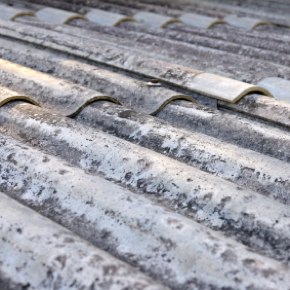
26/08/16. In cases where an employee is exposed to asbestos, a claim may be brought under the common law as well as pursuant to duties owed by the employer under various regulations and legislation. One example of such legislation is s.63 (1) Factories Act 1961, which provides that:
“In every factory in which, in connection with any process carried on, there is given off any dust or fume or other impurity of such a character and to such extent as to be likely to be injurious or offensive to the persons employed, or any substantial quantity of dust of any kind, all practicable measures shall be taken to protect the persons employed against inhalation of the dust or fume or other impurity and to prevent its accumulating in any workroom…”
In McDonald v National Grid Electricity [2014] UKSC 53 the Claimant had worked as a lorry driver, frequently entering a power station to make collections, during which time he was exposed to asbestos. The Supreme Court considered s.69 (1) in depth, such as how to approach the need for a claimant to be a “person employed” and the meaning of “in connection with any process”. These two particular points are beyond the scope of this piece.
Lord Kerr, handing down the majority judgement, shed light on the approach to the meaning of ‘dust’ under s.63 (1). It was wrong to interpret s.63 (1) as requiring an employee to be exposed to a “substantial quantity of injurious dust”. This would be to conflate two separate and alternative limbs contained within the subsection.
Limb one, Lord Kerr stated, is concerned with exposure to ‘injurious dust’, irrespective of whether the quantity of that dust is substantial. On the other hand, limb two required a ‘substantial exposure to dust’, irrespective of whether that type of dust is known to be injurious.
Only if the answer is ‘yes’ to either limb will the court turn to asking if there were practicable measures the employer should have taken to protect against the exposure. If no such steps were taken, the employer is liable under s.63 (1).
The focus of this piece is the approach the law should take to defining ‘substantial’ under limb two of s.63 (1). It is argued that because the intended ambit of limb two is broad, s.63 (1) should be kept within normatively acceptable bounds by requiring ‘substantial’ to mean that any exposure exhibited a degree of regularity. One-off emissions resulting in dust-clouds should not per se fall within the definition of ‘substantial’.

Limb 1 vs. Limb 2 – a normative difference?
It is worth asking why there is a dichotomy present in s.63 (1). Is it not simpler to conflate the two limbs, requiring a ‘substantial quantity of injurious dust’? Aside from the textual injustice of that approach, there is an important normative distinction to be made.
While limb one is concerned with dust known to directly harm an individual (a specific risk), such as asbestos, the ambit of limb two is a wider one, aimed at reducing general levels of dust in the workplace, with a desire to guard against the long-term risks of dust more generally. For example, one aim is to reduce long-term exposure to dust whose risks are currently unknown but could be revealed as harmful in the future. Limb two is not therefore concerned with freezing time to look at particular exposures to dust by specific individuals.
Limb one is aimed at protecting individuals from the specific risks of injurious dusts. This specificity to an individual means that an employer can only be liable where, in light of the state of knowledge at the time of exposure, it was reasonable for an employer to foresee that exposure to that specific type of dust would cause that particular employee injury, so as to require the employer to take protective action to protect them.
On the other hand, limb two’s aims are beyond the concern of any particular individual. Limb two therefore does not require any notion of reasonable foreseeability or state of knowledge to be satisfied.
McDonald supports thisanalysis in two key ways. First, the court unanimously agreed that the meaning of ‘substantial’ calls for a purely quantitative assessment. This is because the aim of limb two is to keep general workplace dust levels down. It does not involve looking at the nature of the dust itself nor the foreseeability of injury to an individual.
Second, the court concluded the employer’s duty under limb two is not dependent on the quantity of dust being considerable at the moment of inhalation. What is crucial to the meaning of ‘substantial’ is the quantity of dust in the workplace at any given time dust is released, not the time at which any inhalation occurs. This confirms that limb two is not concerned with the individual.
The majority held that there was insufficient evidence that the exposure in this case was substantial. Evidence of a ‘visible dust cloud’ was not enough. It was not clear such clouds were the only way of assessing dust levels at the time of exposure. This supports the conclusion that irregular dust-clouds, however visible, should not provide a basis for concluding an exposure was ‘substantial’. Stricter scientific approaches to quantification should be pursued, especially because limb two is not about any specific encounter between an individual and a visible dust-cloud.
If limb two aims to keep general workplace dust levels down, it is illogical to include highly irregular dust-clouds or one-off/chance exposures within the ambit of ‘substantial’. Any exposure should take place with a non-negligible degree of frequency and/or regularity. Only then can limb 2 serve its normative function of keeping workplace dust levels low.
As limb one already deals with claimants who are individually exposed to specifically injurious dust concentrations, there is no need for limb two to include infrequent but specific exposures. ‘Substantial’ should require a a minimum degree of regularity or frequency.
Moreover, limb two should not be used as an escape valve for claimants who have been unable to prove that an employer could foresee that a particular exposure to a specific dust would result in injury to the claimant. If a claimant could then rely on those same specific exposures to find a breach under limb two, without also showing some degree of frequency or regularity in the levels of workplace dust, that would render limb 1 superfluous.
Decisions since McDonald
Smith v Portswood [2016] EWHC 939 (QB):
A former employee worked as a joiner for the defendant employer between 1973 and 1977. On the evidence, it was held that very occasionally the employee was required to cut and trim asbestos sheets. The exposure to asbestos would take place for around 10 minutes. The rarity of such occasions and the nature of the activity meant that the concentrations of asbestos exposure did not exceed the Health and Safety Executive’s permitted thresholds contained in Technical Data Note 13 (“TDN 13”).
This fact the TDN 13 thresholds were not exceeded meant that under limb one of s.63 (1), as well as under the common law, the employer could not have foreseen that the exposure was likely to be injurious to the Claimant. The Claimant was left to rely on limb two of s.63 (1), which does not require foreseeability.
In considering if the quantity of dust was ‘substantial’, the witness evidence stated that dust would “fly up into the air”. However, the judge held that much of the dust was removed using an extraction system so it was unlikely that dust-clouds would form. Further, given that there was no reliable method for measuring concentrations of dust, there was no basis on which to conclude the exposure was ‘substantial’ under s.63 (1). Essential considerations of both time and frequency of the exposure were missing.
This is a welcome endorsement of the need for a quantitative approach to the term ‘substantial’ as set out in McDonald. It appears that, as in McDonald, the absence of scientific quantitative evidence led to the conclusion that ‘substantial levels’ of dust had not been proven.
It appears the rarity of the exposures buttressed the judge’s conclusion that exposure was not substantial. This emphasis on the lack of frequency is the correct approach.
Any suggestion that the conclusion of ‘not substantial’ was based on it not being proven that a dust-cloud was visible should be rejected. After all, in McDonald the visibility of a dust-cloud was not decisive. It is frequency and regularity that should count.
The case also shows how a claimant was unable to circumvent its inability to establish liability under limb one (as foreseeability was not proven) by invoking limb two, when they were unable to properly quantify the levels of dust in the workplace.
Prater v British Motor Holding [2016]WL 03947474:
In this case the former employee had been exposed to asbestos while working as a panel beater between 1958 and 1975. The judge in this case adopted the two limb approach to s.63 (1), finding that both limbs were satisfied.
The evidence was that 30-35% of the employee’s work involved exposure to asbestos. The dust was described as being all over his clothing, which was not washed more than once a week. Further, there were no shower facilities. No steps were taken to reduce inhalation or accumulation of asbestos dust.
The judge held that when considering the meaning of ‘substantial’ under limb two, it was a factual question for the trial judge, depending on the evidence in the particular case. He found that the quantity of dust exposure during the Claimant’s employment was substantial. It was “the only quantitative assessment that can be made based on a common sense view of that evidence”. He noted that the dust given off was in such quantities “as to be visible in the air, including as a haze or smog”. The dust-cloud has made yet another irrelevant judicial appearance.
It is suggested that once again the key to this decision was the frequency of exposure. 30-35% of the employee’s work involved exposure to asbestos. Putting limb one aside, there was a frequent and regular high level of dust in the defendant’s workplace, with no steps taken to reduce it.
There is another point in Prater that supports the regularity requirement posited in this piece. The judge held that it did not matter that a quantity of asbestos found before the publication of TDN 13, which was also lower than the concentrations prescribed in TDN 13, could be substantial. This may be surprising but it is surely right. TDN 13 is used as a benchmark of foreseeability under limb one. It therefore does not come into play under limb two.
Substantial dust levels are not marked by any particular concentration of dust. Instead, the focus is on the regularity and frequency with which dust appears in the workplace. The normative underpinning is that an employer should seek to reduce this long-term dust level. Whether a particular individual is exposed to levels of asbestos which are higher than TDN 13, or not, is beside the point. As the judge put it, if an employer does not know whether there is any safe level of exposure, it makes perfect sense to say that the exposure must be reduced to the maximum extent practicable. Under limb two, the focus is on the steps of the employer, not any specific exposure of an employee.
Warne v Vinters-Armstrong Limited [2016] EWHC 1971 (QB);
Most recently, in this case the employee was exposed to asbestos dust during the course of his employment over 50 years ago. The single issue in the case was “how much asbestos the Claimant had been exposed to?” If it exceeded 25 f/ml years than the employer would be in breach of its common law duties to the employee. S.63 (1) was therefore not directly relevant.
However, it is interesting to note what the result should have been had a claim been brought pursuant to s.63 (1). On the facts, the Claimant had been exposed to asbestos dust when he tipped over a dustbin of asbestos to douse any fires that begun on the machine he was manning. This only occurred around 9 times a year. When the fires were doused, large dust-clouds would form which would drift away from the employee as they rose with the heat of the flames.
The judge concluded that the quantity of asbestos exposure was insufficient to create a foreseeable risk of injury, so that the employer was not in breach of its duty of care. This would mean that limb one of s.63 (1) would also not apply, as the foreseeability test was not satisfied. Would a limb two argument succeed? Despite the presence of a visible asbestos dust-cloud (which would quickly drift away), the important point is that the exposures were infrequent and irregular.
It may be argued that Warne represents a tough, middle of the road case. Difficult line drawing may need to take place to determine if nine instances of exposure are frequent enough to be ‘substantial’ under limb two of s.63 (1). It may be argued that nine times per year is not frequent enough to require the employer to take reduction measures. Limb two is blind to whether the dust is asbestos or any other dust. If dust from outside blew through the window nine times a year, would the law expect the employer to take dust-reducing measures? The bar must surely be higher.
Conclusion
In the context of asbestos claims it is very easy to conflate common law duties with regulations and legislation. There is a great deal of overlap between the different tests required under different heads of claim. Under s.63 (1) Factories Act 1961, there are two separate limbs. The first is not concerned with quantity. Its aim is to target specific cases where particular individuals have been affected by injurious dusts. Foreseeability of the employee’s injury is therefore key. In contrast, the normative importance of limb two is to encourage employers to keep workplace dust levels down. Quantity is key. As part of this quantitative assessment, it is essential to factor in frequency and regularity into the definition of the term ‘substantial’. This is far more important than the visibility of any dust-cloud. Without any regularity, it cannot be expected that an employer should take steps to reduce their dust levels. To hold otherwise is to ignore the function of limb two of s.63 (1).
Further commentary on this topic is provided by the authors at the Pro Vide Law website.
Charles Feeny & Sammy Nanneh
Contributing Editors at Pro-Vide Law
Image ©iStockphoto.com/stozka
Fixed Recoverable Costs-Settling at the Court Door - Jasmine Murphy, Hardwicke

24/08/16. The case of Dos Santos Medes v Hochtief (UK) Constructions Ltd dealt with the issue of fixed recoverable costs (FRC) under the Civil Procedures Rules (CPR) in a claim brought under the Pre-Action Protocol for Low Value Personal Injury Claims in Road Traffic Accidents (RTA Protocol). Jasmine Murphy examines the case and its potential implications.
Original news
Dos Santos Medes v Hochtief (UK) Constructions Ltd [2016] EWHC 976 (QB), [2016] All ER (D) 18 (May)
The Queen’s Bench Division allowed an appeal from a decision of a recorder, refusing to award a fixed-advocacy fee on the basis that the case had settled. It had not strained the language of CPR 45.29C to conclude that the case was one where the claim had been ‘disposed of at trial’, albeit by way of settlement rather than judgment.
What issues did this case raise? Why is it significant?
Medes v Hochtief (UK) deals with another issue thrown up by the drafting of Part IIIA of CPR 45: Fixed Recoverable Costs. FRC apply to cases commenced either in the RTA, Employer’s Liability or Public Liability Protocols after 31 July 2013, but which later leave the Protocol and Part 7 proceedings are issued...
Image ©iStockphoto.com/m-1975
Inadequate Bundles: A Costly Mistake - Ian Miller, 1 Chancery Lane

19/08/16. The July edition of Civil Procedure News reports a case in which a claimant's bundles were inadequate, two applications were adjourned and the claimant was ordered to pay the costs of producing properly prepared bundles and the costs thrown away as a result of the adjournment.
The claimant had brought three applications for summary judgment on three separate claims. Two of the applications were supported by a witness statement which had 750 pages of exhibits. The judge criticised the lack of pagination and the fact that many of the exhibits were not placed in the bundle where they were stated to be in the witness statements. The inadequate pagination meant that the time-estimate for pre-reading and the hearing was inadequate. The judge found there had been a breach of the Overriding Objective (managing the courts resources proportionately).PM Project Services Limited v Dairy Crest Ltd [2016] EWHC 1235 is a sobering reminder of the potential consequences of poorly-prepared bundles.
This decision comes hot on the heals of a decision earlier this year by the Court of Appeal. The editor of the Civil Procedure News draws attention to the decision in Pawar v JSD Haulage Ltd [2016] EWCA Civ 551 in which the Court of Appeal granted the respondent its costs of having to prepare appeal bundles as those submitted by the appellant were described as "chaotic".
Ian Miller
1 Chancery Lane
Image ©iStockphoto.com/imagestock
What May Explain Persistent Symptoms Following a Mild Head Injury? - Dr Linda Monaci, Consultant Clinical Neuropsychologist and Chartered Clinical Psychologist

17/08/16. A road traffic accident or other traumatic event which involves a head injury may cause a brain injury, which can cause cognitive, emotional and physical symptoms. The severity of the brain injury is usually graded as mild, moderate or severe and this can help provide accurate information to the individual affected and their families, as well implement the correct rehabilitation intervention.
Only a minority of individuals experience cognitive and emotional symptoms a year after a mild brain injury. To date, there are disagreements about the conceptual framework in which persistent symptoms after mild head injury should be considered, and consequently treated. Some experts regard these symptoms as due to the neuronal and pathogenic process associated with a traumatic brain injury; others regard these symptoms as merely co-occurring after a brain injury, triggered by the same event, but produced by different mechanisms. To complicate matters there are also cases in which a very minor blow to the head can cause persistent cognitive and emotional symptoms, although arguably any brain injury is very unlikely. Given the secondary gains involved in a compensation claim it is always necessary to also consider symptom magnification and/or cognitive underperformance.
Case study
A hypothetical example could be a young man who following a mild traumatic brain injury during a car accident does not receive any formal cognitive assessment or any guidance on recovery by NHS services. The NHS treatment focuses on his other injuries, but he experiences cognitive problems. He goes online and reads about brain injury symptoms. During his rehabilitation funded by the claim, cognitive symptoms are attributed to emotional disturbances and he does not receive any expert formal assessment of his cognitive functioning. He is referred to a charity for people with head injuries where he shares his difficulties with other attendees. He starts feeling his life is ruined and feels resentful with the driver of the car in which he travelled. Eventually he receives an expert clinical neuropsychological assessment as part of his compensation claim. Twelve months post-accident he has not yet returned to work due to his self-perceived cognitive problems. He still suffers from anxiety and depression and his activities of everyday living are very limited.
At formal assessment his cognitive test results indicate intact cognitive skills and treatment recommendations are made. He then goes on to receive Cognitive-Behavioural Therapy (CBT) by a treating Clinical Neuropsychologist, including guidance on recovery following a mild brain injury and symptom misattribution. The aim is for the young man to feel again satisfied with his abilities, to feel able to cope, for him to gradually return to work, for his mood to improve and for his activities to return to normal levels.
This example highlights the importance of considering the whole clinical picture, both also relying on validated and standardised tools, both for the purpose of establishing diagnosis, causation and prognosis.
Who is a Clinical Neuropsychologist?
It therefore appears of paramount importance that a Clinical Neuropsychologist is involved in assessing someone’s cognitive and emotional functioning and also be given access to any hospital records as well as GP’s records. In most cases this is essential to be able to correctly identify the severity of a known or suspected brain injury as well as any pre-existing vulnerabilities, which in turn informs on recovery and provision of the most effective rehabilitation treatment, as well as impacting on the potential financial value of a case. As Prof Jane Ireland’s review has found some individuals appear to offer medico-legal services but lack the required professional qualifications.
Disregarding the complexities of psychosocial variables may otherwise lead practitioners to erroneously conclude someone intentionally feigns their symptoms when this is not the case. This is why it is important that only qualified Clinical Neuropsychologists are involved in carrying out medico-legal evaluations of cognitive functioning. For those outside the field: being a Chartered Psychologist with the BPS does not necessarily indicate that the Psychologist is registered with the Health and Care Profession Council (HCPC), which would be statutorily required to be employed in the NHS. Recent BPS professional guidelines (2013) stated that although the title of Clinical Neuropsychologist is at present not legally protected titles, “To refer to oneself as a Clinical Neuropsychologist, Consultant Clinical Neuropsychologist or to offer Clinical Neuropsychology services whilst not listed on the SRCN is acting against this professional & ethical guidance. Professionals undertaking QiCN training should always have their clinical neuropsychological work supervised by a member of the SRCN”.
Dr Linda Monaci
Consultant Clinical Neuropsychologist and Chartered Clinical Psychologist
This article was first published in NLJ
Image ©iStockphoto.com/aceshot





![Appeal judge rules that credit hire company has no costs liability following a finding of fundamental dishonesty in personal injury case: RSA v. Fastrack Solutions Limited [2023] 4 WLUK 92 - David Bowden, Erimus Chambers](/content/images/resized/images/stories/carkeys_72_72.jpg)


