News Category 3
'Promptness Is the Soul of Business' - A 'Harsh' Lesson From the Recent Court of Appeal Decision in Gentry v Miller & Anor [2016] EWCA Civ 141 - Andrew Cullen, Barrister
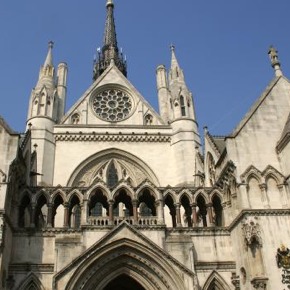
20/04/16. The recent decision of the Court of Appeal in Gentry v Miller & Anor [2016] EWCA Civ 141 is yet another timely reminder of the importance of compliance with the requirements under the CPR. Here their Lordships overturned an order granting relief from sanctions in a case where an insurer had been conspicuously dilatory. The case proffers helpful guidance on how courts should approach relief from sanction applications where there has been a delay in seeking relief but the defaulting party seeks to allege the claim was fraudulent.
Background
The underlying claim arose out of a road traffic accident which occurred on the 17th March 2013. Although the Defendant’s insurer admitted liability on the 2nd April 2013, they failed thereafter to engage effectively with the claim, notwithstanding that they had received requests for payment and five reminder letters over three months. It was clear that at all times the insurer knew that car hire charges were accruing. As the Defendant insurer had failed to acknowledge service, judgment in default was entered. The matter came before Deputy District Judge Benson at a Disposal Hearing on 17th October 2013 which neither the Defendant nor its insurer attended. The judge awarded the Appellant damages in the sum of £75,089, together with costs summarily assessed at £12,945...
Image cc Ian Britton
Summary of Recent Cases, April 2016

15/04/16. Here is a summary of the recent notable court cases over the past month. You can also receive these for free by registering for our PI Brief Update newsletter. Just select "Free Newsletter" from the menu at the top of this page and fill in your email address.
Summary of Recent Cases - Substantive Law
Brian James Lear v (1) Hickstead Ltd (2) WH Security Ltd [2016] EWHC 528 (QB)
A Claimant's negligence claim against the owner of a showground and the contractor managing parking at horse shows was not made out. The Claimant's injuries sustained while lowering the ramp on his horsebox were...
Image ©iStockphoto.com/spxChrome
Future Loss in Fatal Cases: Ironing Out a Longstanding Wrinkle in the Law - Niall Maclean, 12 King’s Bench Walk
 14/04/16. In simpler times, multipliers for calculating future losses in personal injury and fatal accident cases were selected impressionistically on a broad-brush jury basis. All that changed in 1999, when the House of Lords in Wells v Wells [1999] 1 AC 345 explicitly approved the use of multipliers selected from the Ogden tables. Those multipliers are calculated actuarially to contain within them a double discount.
The first is to take into account the so-called “vicissitudes of life” i.e. the risk of death or misfortune curtailing the receipt or provision of the relevant earnings, pension, services etc. The second is to take into account the fact that the claimant is receiving an up-front lump sum for monies he or she could only have accrued over a long period of time but for the tort. This is a discount for accelerated receipt. The claimant is expected to invest the money at an estimated rate of return such that the fund is expended on the day the period of loss comes to an end. Or so the theory goes.
The theory works well in personal injury cases. Few would doubt there has been a gain in precision. But until recently the picture was very different in fatal cases...
Image ©iStockphoto.com/studiocasper
Vicarious Liability After Cox v Ministry of Justice - Philippa Luscombe, Penningtons Manches LLP
 11/04/16. Vicarious liability has been a topic frequently visited by the courts over the years but the recent conjoined appeals of Cox [2016] UKSC 10 and Mohamud [2016] UKSC 11 have provided the most significant clarification and extension for some time. Vicarious liability originally started as a doctrine applicable only in the context of an employer and employee relationship where the wrongdoer was an employee acting in the course of their employment but has gradually been extended – and these cases both widen its application.
The case of Cox (the subject of this article) focused on what relationship between defendant and wrongdoer could give rise to vicarious liability and Muhamud focused on the connection between that relationship and the actions taken and how that determines where vicarious liability rests...
Image ©iStockphoto.com/BrianAJackson
Vicarious Liability: Extension, Extension, Extension - Ian Miller, 1 Chancery Lane

10/04/16. 'The law of vicarious liability is on the move' are the opening words to the opinion of Lord Reed in Cox v Ministry of Justice [2016] UKSC 10 (quoting Lord Phillips in Various Claimants v Catholic Child Welfare Society [2012] UKSC 56). The Supreme Court has handed down two judgments in the field of vicarious liability (Cox and Mohamud v WM Morrison [2016] UKSC 11) which continue to extend its scope.
The five policy reasons for the vicarious liability relationship identified in the Christian Brothers case have effectively been narrowed to three in Cox - a case in which the Supreme Court found that the prison service was vicariously liable for the negligence of a prisoner working in a prison kitchen.
In Mohamud the Supreme Court stuck to the articulation of the law in Lister v Hesley Hall [2002] 1 AC 215 but elaborated saying that the court has to consider (1) what functions or “field of activities” have been entrusted by the employer to the employee (a question to be approached “broadly”) and (2) whether there was a sufficient connection between the position in which he was employed and his wrongful conduct to make it right for the employer to be held liable. That broad approach meant that the employer of an attendant at a petrol station was vicariously liable for the attendant’s violent attack on the claimant on the petrol station forecourt.
Ian Miller
1 Chancery Lane
Image ©iStockphoto.com/liveostockimages
More Articles...
- Fixed Costs and Part 36 Offers - Thomas Crockett, 1 Chancery Lane
- Loss of Earnings: the Appropriate Loss of Earnings Multiplier for an Injured Claimant: Mitigation of Loss - Gordon Exall, Zenith Chambers & Hardwicke
- Syred: The Consequences of Rome II’s Application to an English Claimant’s RTA in Poland - Charles Cory-Wright QC, 39 Essex Chambers
- Update From North of the Border: Court Reforms - Sarah Donaldson, Brodies LLP





![Appeal judge rules that credit hire company has no costs liability following a finding of fundamental dishonesty in personal injury case: RSA v. Fastrack Solutions Limited [2023] 4 WLUK 92 - David Bowden, Erimus Chambers](/content/images/resized/images/stories/carkeys_72_72.jpg)


