News Category 3
Is There a Fourth Way to Assess Future Loss of Earnings? - Geoff Owen, Greenwoods Solicitors

09/10/14. Once upon a time there was the Smith v Manchester award. If the claimant returned to work but with a disability which put him at a substantial and not speculative or fanciful disadvantage on the open labour market, he would receive an award, often linked to so many months’ or years’ net earnings, depending on the level of risk. For example in Hindmarch v Virgin Atlantic (2011) the allowance was the equivalent of a year’s net pay.
Prior to Ogden 6, the Smith award was also relevant in a more serious case involving a claim for continuing, partial loss of earnings. John Smith (not his real name) was seriously injured. But for the accident he would have earned £25,000 p.a. net. Following the accident he eventually returned to work at a reduced level of £15,000. If the adjusted multiplier* was 18.13, the defendant would argue that John’s loss was...
Image ©iStockphoto.com/catenarymedia
Loss of Services Claim for “Housewife” Is Not a Nominal Loss - Gordon Exall, Zenith Chambers

01/10/14. I looked at the case of Knauer -v- Ministry of Defence [2014] EWHC 2553 (QB) in an earlier article. However one significant aspect of the case justifies close examination. The judge put a clear and definite value on the loss to a widower caused by the death of his wife who were in a “traditional” relationship where she did all the housework. This case belies the contention that loss of services claims are “nominal”. They have a substantial value and careful enquiries have to be made.
THE FACTS
The couple were in, what the judge described, as a “traditional” relationship whereby Mrs Knauer did the majority of the housework. The judge carried out a careful valuation of the services provided and concluded that they had a substantial financial value...
Unacceptable Behaviour From Experts - Bill Braithwaite QC, Head of Exchange Chambers

29/09/14. I saw a client recently who had visited quite a lot of medico-legal experts. He has sustained a serious brain injury, as well as many other serious injuries. He was accompanied by a member of his family; she seems to me to be an extremely sensible and nice person. According to her, the consultation with the expert (a doctor) was “horrible”; he was rude, and she was so upset by the process that she felt she had to leave before the end. In addition, she said that, when he phoned (presumably to make an appointment) and spoke to her, he was “inappropriate”. She said he was the rudest man she had met.
I feel very strongly about this sort of behaviour. All experts owe a duty to the solicitor or insurer instructing them to behave appropriately; that includes reading all relevant papers in advance, being punctual, being courteous, and making an independent effort to find out the real problems.
Personally, I would want to withhold payment for a consultation like the one described, and I would certainly circulate details of the doctor so that others don’t use him.
Incidentally, you may be assuming that he was a defence hatchet man; not a bit of it – he was reporting for the claimant.
I've known him for 20 years, and I've never used him!
Bill Braithwaite QC
Head of Exchange Chambers
This article was first published at http://billbraithwaite.com/blog/
Image ©iStockphoto.com/mediaphotos
Editorial: Fundamental Dishonesty and Discontinuance - Aidan Ellis, Temple Garden Chambers

23/09/14. It is well known that Qualified One Way Costs Shifting protects unsuccessful Claimants against the enforcement of costs orders against them, unless certain exceptions apply. One such exception arises where the claim is fundamentally dishonest. Often this can be determined at the end of trial. But what should happen if the Claimant, faced with a Defence pleading fraud, discontinues? On the one hand, the intention of the rules is that a dishonest Claimant should not benefit from costs protection. On the other hand, it is problematic to reach a determination of fundamental dishonesty without a trial.
The Practice Direction to Part 44 provides that in case of discontinuance...
Image ©iStockphoto.com/
Denton and the Misunderstanding of Mitchell - Jim Hester, Parklane Plowden Chambers
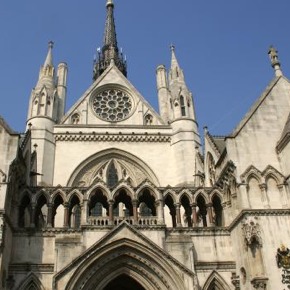
18/09/14. Hot on the heals of the seminal Mitchell judgment in November, and the resulting impact on the civil justice system, the Court of Appeal has found it necessary to refine the way that Judges should approach applications under CPR 3.9 – Relief from Sanctions.
Like a recalcitrant teenager, the Court of Appeal in Denton has found that Mitchell is not wrong, but it has been “misunderstood”. By almost everyone. For instance each of the three QC Circuit Judges whose cases were the subject of the appeals in Denton, had misunderstood and misapplied Mitchell. The Court of Appeal, however, did admit that the original judgment needed to be ‘clarified and amplified’.
I should say that Denton is another must-read for anyone engaged in civil litigation. However, this brief case analysis will, I hope, set out the ‘new’ guidance for interpretation of the new CPR r3.9 – relief from sanctions.
Image cc Ian Britton
More Articles...
- The Right to Choose - Bill Braithwaite QC, Head of Exchange Chambers
- The Law Relating to Fatal Accidents: An Introduction - Gordon Exall, Zenith Chambers
- "Professional" McKenzie Friends: LSB Reaction to Consumer Panel's Recommendations - Thomas Crockett, 1 Chancery Lane
- A Judgment for What? The Effect of Default Judgments - Paul Stagg, 1 Chancery Lane





![Appeal judge rules that credit hire company has no costs liability following a finding of fundamental dishonesty in personal injury case: RSA v. Fastrack Solutions Limited [2023] 4 WLUK 92 - David Bowden, Erimus Chambers](/content/images/resized/images/stories/carkeys_72_72.jpg)


