News Category 3
One Judge Can Summarily Assess The Costs Of Another Judge’s Costs Order - Nick McDonnell, Just Costs Solicitors

20/10/15. In Transformers And Rectifiers Ltd v Needs Ltd [2015] EWHC 1687 (TCC) (12 June 2015), Coulson J found that, in certain circumstances, a judge can summarily assess the costs arising out of a costs order made by a different judge.
Wasted costs orders were made by Edwards–Stuart J against a Defendant when it sought the adjournment of a trial. The Claimant argued the costs could be summarily assessed by another judge and the Defendant argued that they must be summarily assessed by the judge who made the orders.
Coulson J found that, the civil procedure rules as they stand now mean that there is no bar on a different judge summarily assessing costs. He found that the position may be different if the costs orders arose from a contested hearing and the assessment of costs depended on the views formed by a judge following submissions. But if orders are made following consideration of the papers for example (as was the case here) a different judge has precisely the same material available to him...
Image ©iStockphoto.com/
The Abolition of Civil Liability in Employer's Liability Claims: An Early Indication of the Courts' Approach? - Jack Harding, 1 Chancery Lane

06/10/15. Section 69 of the Enterprise and Regulatory Reform Act 2013 amended section 47 of the Health and Safety at Work etc. Act 1974 in so far as it relates to civil liability. The section now provides that breach of a duty imposed by a statutory instrument containing health and safety regulations shall not be actionable except so far as regulations made under the 2013 Act so provide. The Act applies came into force on 1st October 2013 and applies to all accidents arising after that date.
There was much debate amongst practitioners in the field of personal injury about what effect the repeal of civil liability would have in the context of employer's liability claims. The general consensus seemed to be that in order to reflect the statutory purpose behind the changes there must be some substantive difference in the way that the courts would approach these cases, otherwise the exercise was a futile one.
There are not, as far as this author is aware, any relevant reported decision of the English Courts which post-date the changes.
However, in the Scottish case of Gilchrist v ASDA (2015) Rep. L.R. 95 Lady Stacey, sitting in the Outer House, approved the following submissions made by Counsel for the Pursuer (the Claimant) about the effect of the changes:

"Counsel submitted that employers remain under a statutory duty to comply with health and safety regulations, as the duties set out in statutory instruments made prior to the 2013 Act inform and may define the scope of duties at common law. She made reference to a ministerial statement in the House of Lords in which a government spokesman stated that the Act did not undermine core health and safety standards and that employers' statutory duties would remain relevant as evidence of standards expected of employers in civil cases. She argued that an employer who breached a regulation and was thereby committing an offence could hardly argue that he was acting reasonably. She referred to Munkman, p.668, Charlesworth and Percy, para.12–73 and Robb v Salamis (M&I) Ltd . Counsel argued that the existence of a regulation demonstrates that harm is foreseeable, under reference to Boyle v Kodak in which Lord Reid said: “Employers are bound to know their statutory duty and to take all reasonable steps to prevent their men from committing breaches” ([1969] 1 W.L.R., p.668)."
It should be noted that Counsel for the Defender did not offer any alternative submissions and therefore it would appear that the Court did not hear any proper argument on the issue. Nonetheless, it is noteworthy that a Court at this level was willing to accept the pursuer's submissions so readily and it will be interesting to see how the case law develops in England and Wales in due course.
Image ©iStockphoto.com/BrianAJackson
Is it Time for Medical Ethics Experts in Lack of Consent Cases? - Daniel Sokol, 12 King's Bench Walk
 12/10/15. Following the landmark case of Montgomery v Lanarkshire Health Board [2015] UKSC 11, I have been instructed on several cases of alleged failure to obtain valid consent. At present, consultants in the relevant specialty are asked to produce expert reports on the quality of the consent process. The reports are, generally, of dubious value.
Medical expertise is not ethical expertise
The doctors' expertise in matters of diagnosis, treatment, or causation - such as whether a GP should have referred a patient to a specialist sooner or the likelihood of a patient developing multiple sclerosis - does not necessarily translate to issues of medical ethics. Many experts, now senior consultants, were trained at a time when there was less fuss about consent. Their own practice on consent may fall short of the new legal standard.
In several cases, the medical experts appeared confused by the new test of materiality set out in Montgomery (i.e., a doctor must take reasonable care to ensure that the patient is aware of any material risks involved in any recommended treatment, and of any reasonable alternative or variant treatments) and still resorted to the obsolete Bolam standard (i.e., conduct supported by a responsible body of medical opinion). They commented on what happens 'in practice' and concluded, wrongly, that since it happens commonly there is no breach of duty.
Some of the experts are unfamiliar or dismissive of the stringent standards of the General Medical Council. For example, the GMC guidance on consent (2008) - which was endorsed by the Supreme Court in Montgomery - states that doctors must tell patients of their right to seek a second opinion. They must also tell patients whether the benefits or risks of a procedure are affected by which organisation or doctor is chosen to provide care. The expert may think this is nonsense, but that is what the professional body requires.
The non-clinical nature of consent cases
Consent, unlike most areas of clinical negligence, contains a significant non-medical dimension. The Supreme Court in Montgomery noted this at paragraph 85:
85. Deciding whether a person is so disinclined [to be told of a risk of injury] may
involve the doctor making a judgment; but it is not a judgment which is dependent on medical expertise. […] the need for that kind of skill and judgment [to explain the risks of a procedure] does not entail that the question whether to explain the risks at all is normally a matter for the judgment of the doctor.
And also in paragraphs 114 and 115:
114. […] Dr McLellan referred to explaining to a mother who requested a caesarean section "why it may not be in the mother's best interest" and later expressed the view that "it's not in the maternal interests for women to have caesarean sections". Whatever Dr McLellan may have had in mind, this does not look like a purely medical judgment. It looks like a judgment that vaginal delivery is in some way morally preferable to a caesarean section. […]
115. In any event, once the argument departs from purely medical considerations and involves value judgments of this sort, it becomes clear […] that the Bolam test […] becomes quite inapposite.
Issues of consent usually involve non-medical judgments on the significance of a particular piece of information to a patient’s decision. For example, should a doctor tell parents of a 1/15,000 risk of death from tonsillectomy? Should a transplant team tell an adult daughter who is about to donate her kidney to her critically ill father that tests have shown he is not her biological father (although the transplant can still take place)? Would withholding that information invalidate the daughter’s consent?
The expert medical ethicist
For the first time, I have wondered whether a report from the right medical ethicist would be more effective.
This ethicist would be medically literate (there are medical notes and articles to be read), familiar with the historical, philosophical, medical, legal and regulatory literature on consent, and able to write and speak clearly and authoritatively. He or she would also need the credentials to persuade the Court - and the other side - of his or her expertise. This would almost certainly include a senior academic post, teaching experience, and relevant publications in leading specialty journals.
An ethics expert may be helpful in respect of breach of duty but may be less useful than a medical expert on the issue of causation (i.e., on whether the patient would still have had the procedure even if properly 'consented'). An ethicist would not be in a position to say, for example, that in decades of practice he or she had never seen a patient decline an operation once appraised of the minute risk of complex regional pain syndrome or that, in his experience, diabetic patients often choose a caesarian section when offered the option.
Yet, even with that limitation, ethicists - unpolluted by the grim realities of practice, the years of habit, and automatic reliance on the Bolam test - may offer parties and the courts a more accurate assessment on the validity or otherwise of a patient’s consent.
Daniel Sokol is a barrister and medical ethicist at 12 King’s Bench Walk, Temple, London
Image ©iStockphoto.com/mediaphotos
The Scope of Negligence Liability of Those Suffering From Mental Illness - Richard Spearman QC, 39 Essex Chambers & Stuart Nicol
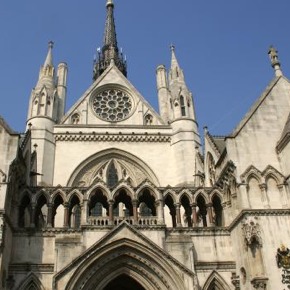 09/10/15. Dunnage v Randall and another [2015] EWCA Civ 673, [2015] All ER (D) 49 (Jul). In a judgment handed down on 2 July 2015, the Court of Appeal stated how, in accordance with English law, the tort of negligence strikes a balance between individuals who by reason of mental illness have no rational control over their actions and persons who are injured by such actions.
The facts of the case were striking and horrific. In October 2007, the claimant (C) was visited in his home by his uncle (V) with whom he had been on good terms, but who was diagnosed post-mortem as having suffered florid paranoid schizophrenia. C, a rescuer to whom both the judge and the Court of Appeal paid tribute, was extremely seriously burned as a result of V pouring petrol over himself. C struggled unsuccessfully to prevent V igniting the petrol with a lighter that V was holding, and both men were engulfed in flames. V died at the scene. C survived by jumping to safety from a balcony.
Following a trial on liability in February 2014, the judge dismissed the claim on the basis that due to his mental illness, V's acts were involuntary and that V therefore had no legal liability to C. His Honour Judge Saggerson held at [34]-[35] that “[V’s] physical, mechanical actions on this occasion were driven by an overwhelming, irresistible impulse brought about by his florid psychotic state at the time he set the fire which state also deprived him of any ability to consider the...
Image ©iStockphoto.com/
The Ogden Tables -v- Smith & Manchester: A Court of Appeal Decision on Loss of Earnings - Gordon Exall, Zenith Chambers
 07/10/15. In Billett -v- Ministry of Defence [2015] EWCA Civ 773 the Court of Appeal overturned a decision that future loss of earnings should be determined by the “Ogden tables” approach and replaced it with the more traditional Smith -v- Manchester approach. Lord Justice Jackson sets out a detailed explanation of the “calculation” of a Smith award and the “Ogden Tables” approach. The Court of Appeal held that the “Ogden” approach should not be applied in the current case.
THE CASE
The claimant was a soldier who suffered a non-freezing cold injury to his feet. He subsequently left the army and found employment as a driver. Liability had been agreed at 75%. The trial judge awarded damages on the basis of the Ogden Tables A & B approach and awarded damages for future loss of earnings in the sum of £99,062.04...
Image ©iStockphoto.com/Rockfinder
More Articles...
- Is It Strictly Illegal? - Simon Anderson, Park Square Barristers
- Practice, Procedure and Fair Proceedings in the Coroner’s Court: Wilson -v- Hm Senior Coroner for Birmingham and Solihull - Gordon Exall, Zenith Chambers
- What Is It About Driving? - Peter Harthan, 7 Harrington Street
- Norovirus Claims: Are They Worth Pursuing? - Tina Patel, Leigh Day





![Appeal judge rules that credit hire company has no costs liability following a finding of fundamental dishonesty in personal injury case: RSA v. Fastrack Solutions Limited [2023] 4 WLUK 92 - David Bowden, Erimus Chambers](/content/images/resized/images/stories/carkeys_72_72.jpg)


